
Crowd preference
How many other tourists is too many?
Best months for atmosphere without overwhelming crowds
Morocco — meaningfully fewer visitors than peak, but the destination is fully open and operating normally. Good balance of atmosphere and accessibility.
Shoulder Season Morocco 2026: Best Time to Visit Marrakech & Beyond
Marrakech in July is 38°C. The same medina in April is 26°C — and the rose fields of the Dades Valley are in bloom, the Sahara is perfect for an overnight camp, and hotel prices are 20–35% below the Christmas–New Year peak. Morocco's shoulder seasons of March–April and October–November are when the country is most itself: the souqs alive, the Atlas Mountains accessible, and the extremes of heat and tourist density both reduced.
Cheapest Months to Travel to Morocco
Morocco Shoulder Season at a Glance
When is Shoulder Season in Morocco?
Morocco's tourist season peaks at two points: Christmas–New Year (December 20–January 5, when European visitors fill Marrakech riads) and spring break (Easter week). The shoulder seasons fall between these peaks and before the summer heat arrives.
Spring: March–April
- Marrakech temperature: 20–28°C
- Sahara: 25–32°C days, 8–12°C nights
- Hotel prices: 20–30% below Christmas peak
- Rose festival: early May (Dades Valley)
- Atlas Mountains: wildflowers, trekking season
- Ramadan 2026: February — mostly behind spring visitors
Autumn: October–November
- Marrakech temperature: 22–30°C (October)
- Sahara: cooling, 28–35°C days, 10°C nights
- Hotel prices: 15–25% below Christmas peak
- Date harvest in Erfoud and Draa Valley (October)
- Atlas: trekking before winter snow above 2,500m
- Crowds: lower than spring shoulder
Spring (March–April): Roses, Sahara & Perfect Temperatures
April in Morocco is as close to perfect as the country gets. Marrakech averages 24–28°C — warm enough to sit in the Djemaa el-Fna square at sunset without discomfort, cool enough to explore the souqs at any hour. The Atlas Mountains above Marrakech are snow-capped but accessible, and the route south through the Draa Valley to Merzouga has vivid spring colour in the oases.
The Rose Festival in the Dades Valley (early May, village of Kelaat M'Gouna) celebrates the harvest of Morocco's famous rose crop. The valley fills with pink Damask roses in late April and early May — one of the most visually extraordinary seasonal events in North Africa. A road trip combining Marrakech → Ouarzazate → Dades Gorge → Merzouga (3–4 days) in late April–early May catches both the roses and ideal Sahara temperatures.
Ramadan 2026 — plan around it
Ramadan 2026 falls approximately February–March. When Ramadan overlaps with spring tourist season, some restaurants have limited daytime service and the evening iftar (breaking fast) creates a specific, genuinely atmospheric energy in the medinas. Marrakech and Fez during Ramadan at iftar time — with the souqs suddenly quieting and families gathering — is one of Morocco's most authentic experiences. But plan that daytime restaurant logistics may be limited.
Autumn (October–November): Harvest Season & Empty Desert
October is Morocco's quietest quality month. The summer heat has broken (Marrakech drops from August's 38°C to a comfortable 28°C), the Christmas–New Year rush hasn't arrived, and prices are at their lowest since the spring shoulder. The date harvest in the Draa Valley and around Erfoud (October) is one of the south's finest seasonal moments — the palm groves loaded with dates, the desert cooler, and the tourist circuit largely empty.
November is the outer edge of the autumn shoulder — cooling in Marrakech (20–24°C) but still comfortable for medina exploration. The Atlas Mountains above 2,500m may see first snow in November, closing some high passes. Southern Morocco (Agadir, the Draa Valley, Sahara) remains warm and excellent through November.
Summer: Two Very Different Moroccos
Inland Morocco (Marrakech, Fez, Meknes): July and August regularly hit 38–42°C. The medinas become genuinely difficult to explore in the middle of the day. If you visit in summer, restrict outdoor sightseeing to before 10am and after 5pm, stay in a riad with a courtyard pool, and spend midday in the shade.
Atlantic coast Morocco (Essaouira, Agadir): The Canary Current keeps the Atlantic coast of Morocco dramatically cooler than the inland — Essaouira averages 22–24°C in July while Marrakech bakes at 38°C. This makes Essaouira one of Morocco's best summer destinations: a beautifully preserved Portuguese-walled medina, strong Atlantic winds (it's known as the windy city and is a wind/kite surfing hub), and an authentically Moroccan town that doesn't feel like a tourist resort.
Best Time by Destination
| Destination | Best months | Avoid |
|---|---|---|
| Marrakech | March–April, October–November | July–August (38–42°C) |
| Fez and imperial cities | March–May, September–November | July–August (40°C+) |
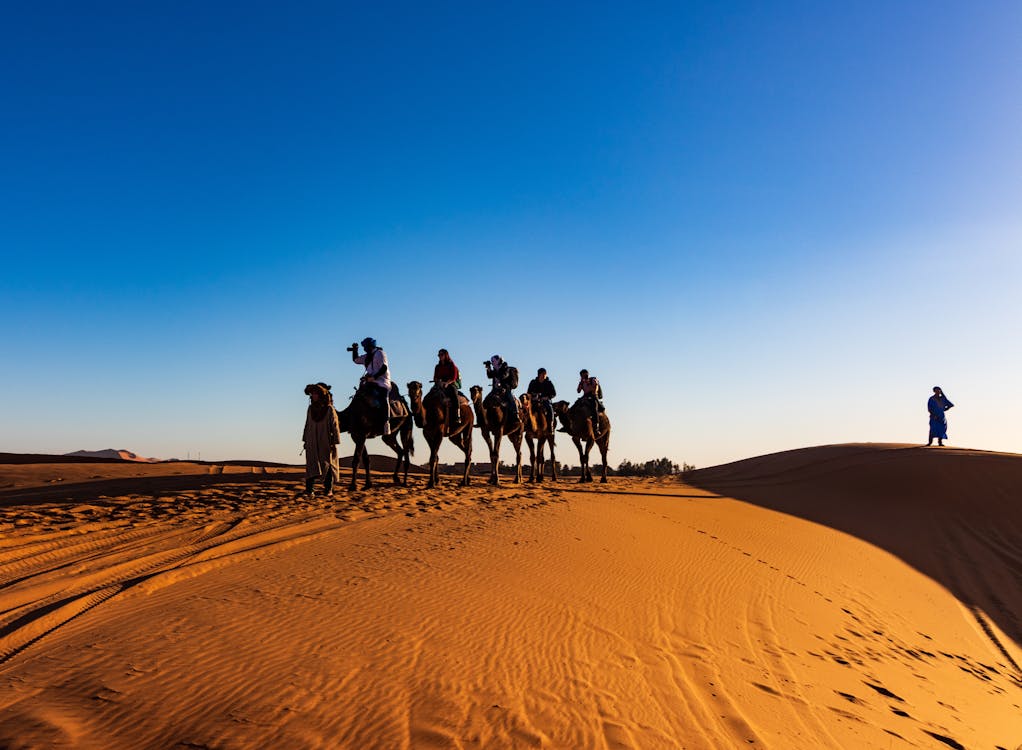
| Sahara (Merzouga, M'hamid) | October–April | June–August (45°C+ desert heat) |
| Essaouira / Atlantic coast | Year-round; best June–September | Nothing — Atlantic breeze keeps it cool |
| High Atlas / trekking | April–June and September–October | July–August (heat), December–March (snow above 2,500m) |
| Dades Valley / rose route | Late April–early May (rose harvest) | Summer heat, winter cold nights |
| Merzouga dunes | October–April (cold nights, comfortable days) | June–August (45°C+ unbearable) |
Morocco Month by Month
January
Marrakech 8–18°CPost-Christmas quiet. Cheap hotels. Cold nights in the Sahara and Atlas. Good for city breaks in Marrakech and Fez. Snow in the High Atlas.
February
Marrakech 10–20°CAlmond blossom in the Atlas foothills. Ramadan 2026 (~Feb 17). Cold but improving. Good shoulder pricing.
March ⭐
Marrakech 13–23°CSpring beginning. Warming rapidly. Good value. Atlas accessible. Sahara ideal. Wildflowers in the foothills.
April ⭐
Marrakech 16–26°CBest spring shoulder month. Perfect temperatures everywhere. Easter spike for the long weekend. Dades Valley road trip ideal.
May
Marrakech 20–31°CRose Festival early May (Kelaat M'Gouna). Warming up — medina afternoons getting hot. Good first half; challenging second half.
June
Marrakech 24–37°CHeat building rapidly. Atlantic coast (Essaouira) excellent. Inland getting difficult for midday sightseeing.
July
Marrakech 22–38°CInland cities very hot. Essaouira and Agadir excellent. Sahara camping uncomfortable. Go coastal if visiting July.
August
Marrakech 22–38°CSame as July. Avoid inland unless coastal trip. Lowest prices of year for inland hotels — reflects the conditions.
September
Marrakech 18–34°CStill warm but cooling from August. Transition month. Second half of September much more comfortable than first half.
October ⭐
Marrakech 15–28°CAutumn shoulder sweet spot. Date harvest in south. Sahara ideal. Prices below Christmas peak. Quietest tourist month of the year.
November ⭐
Marrakech 11–22°CGood autumn shoulder. Cooling but still comfortable. Atlas trekking last chance before winter snow. Christmas crowds haven't arrived.
December
Marrakech 8–18°CChristmas–New Year peak (Dec 20–Jan 5): riads fill completely, prices at year's highest. Early December excellent value with festive medina atmosphere.
Frequently Asked Questions
When is shoulder season in Morocco?
Morocco's shoulder seasons are March–April and October–November. Both avoid the summer heat (Marrakech averages 38°C in July–August) and the peak Christmas–New Year crowds. April is the finest spring month: 22–28°C, roses blooming in the Dades Valley, and the country fully alive before summer. October is the autumn equivalent — harvest season, comfortable temperatures, and hotel prices 20–35% below the summer peak.
Is Morocco too hot in summer?
The inland cities — Marrakech, Fez, Meknes — are very hot in July and August, regularly reaching 38–42°C. This makes medina exploration and souq shopping genuinely uncomfortable in the middle of the day. The Atlantic coast (Essaouira, Agadir) is much cooler in summer due to Atlantic breezes and is actually a popular summer destination. If you're visiting Marrakech, avoid July–August or plan all outdoor sightseeing before 10am and after 5pm.
What is the best time to visit the Sahara desert?
October through April is the best window for Sahara desert experiences (Merzouga, M'hamid). Summer temperatures in the Sahara can exceed 45°C, making overnight camping extremely challenging. March–April and October–November offer comfortable desert temperatures (20–30°C during the day), cold nights (5–10°C — pack layers), and the dramatic contrast of sunrise over the dunes without heat exhaustion.
Is Morocco safe to visit?
Morocco is one of Africa's safest destinations for tourists. The main practical issues are assertive medina guides (establish upfront whether someone is offering a free introduction or expects payment), occasional aggressive shop entrances in the souqs, and standard urban pickpocket awareness. Outside these minor navigational considerations, Morocco is very well set up for tourism, with excellent accommodation across all budgets and a well-worn tourist circuit.
What is the rose festival in Morocco?
The Rose Festival (Festival des Roses) takes place in the Dades Valley village of Kelaat M'Gouna in early May, celebrating the rose harvest. The valley produces most of Morocco's rose water and rose oil exports. During the festival week, the Valley of Roses is carpeted in pink bloom. It's one of Morocco's most spectacular and authentic seasonal events, and worth timing a spring visit around if you're combining it with a Sahara desert trip.
Do I need to dress conservatively in Morocco?
Yes — modest dress is respectful and practical in Morocco. Women should cover shoulders and knees in medinas and religious sites; a light scarf is useful for mosques (non-Muslims cannot enter most Moroccan mosques). Men should avoid shorts in medinas and religious areas. The dress code is less strict in coastal resort areas (Agadir, Essaouira) and in riads catering to international tourists.
Morocco city guides
Morocco is featured in:
City Guides for Morocco
Month by month shoulder season timing for every Morocco destination we track.