
Best Time to Visit the Amalfi Coast 2026: May or September
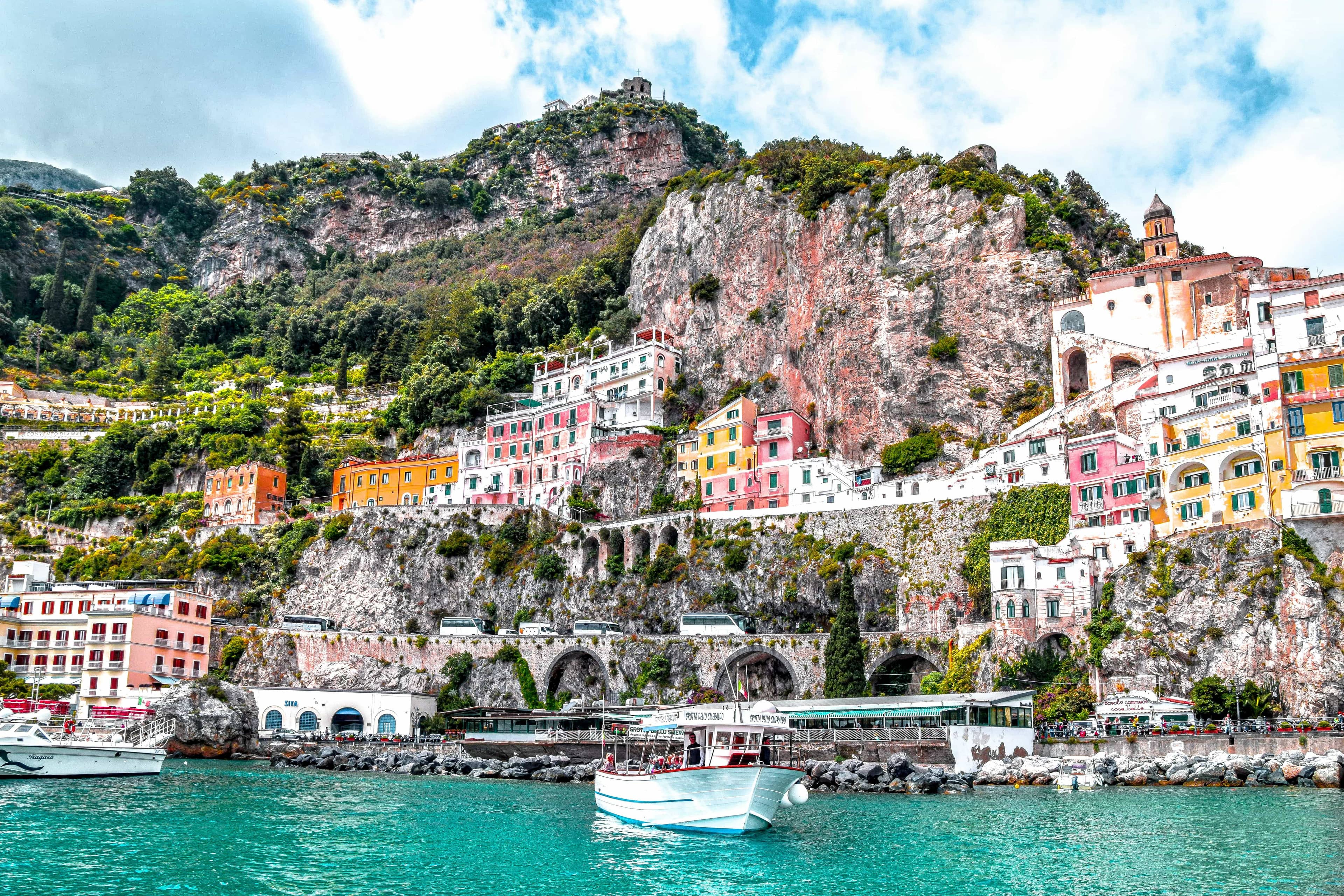
The Amalfi Coast is one of Italy's most spectacular landscapes - 50km of cliff-hugging coastline where pastel-coloured villages tumble down vertiginous hillsides to the Tyrrhenian Sea, lemon groves scent the air from spring to autumn, and the light on the water has inspired painters for centuries. It's also one of the most logistically challenging destinations in Europe, one of the most expensive, and in July and August one of the most uncomfortably crowded. Timing your visit right is the single most important decision you'll make about this trip.
May and September are the Amalfi Coast at their best. In May the lemon groves are in full fragrant bloom, the bougainvillea is flowering on every terrace, temperatures are warm but not brutal, and hotel prices are 30–40% below the August peak. September has the warmth of summer - 26°C - with the summer crowds gone, the sea still at 24°C, and the olive harvest beginning on the hillsides above the coast road.
The Amalfi Coast in May: Lemons & Light Crowds
May is arguably the finest month on the Amalfi Coast. The sfusato amalfitano lemons - enormous, fragrant, and specific to this coast - are in full bloom, their scent drifting from the terraced groves down to the villages. Temperatures reach 20°C. The sea is cold for swimming (18°C) but the hiking, the village exploration, and the ferry journeys between towns are ideal.
Positano in May, before the June–August influx turns its staircase streets into slow-moving queues of visitors, is a genuinely beautiful place. The dome of Santa Maria Assunta, the ceramic-tiled houses tumbling to the beach, and the view from the upper terraces over the rooftops to the sea - all are accessible at human pace. Walk down from the upper road (Via Cristoforo Colombo) to the beach via the back streets rather than the main stepped path, and you'll pass through a Positano that feels almost residential.
May Amalfi Coast Highlights
- Lemon grove tours: Several farms above Amalfi town and Minori offer guided tastings - limoncello, lemon cake, lemon pasta - in the fragrant groves. May is the best time.
- Ravello Festival (May–September): World-class classical music on the terrace of Villa Rufolo with the sea 350m below. One of Europe's finest outdoor concert venues.
- Path of the Gods (Sentiero degli Dei): The 7.5km clifftop trail from Agerola to Nocelle is ideal in May - comfortable temperatures for an exposed ridge walk, extraordinary views.
- Boat hire: Gozzo fishing boats available by the hour in May without the August queue - exploring the sea caves and coves is entirely accessible.
September & October: Summer Warmth, Autumn Prices
September on the Amalfi Coast is the local secret. The Italian school year begins, the August holiday-makers return to their cities, and within days the coast road carries a fraction of its summer traffic. The Tyrrhenian Sea reaches its warmest temperature of the year - 24–25°C - in September, making it the best swimming month despite being post-peak. Hotel prices drop sharply.
October sees temperatures of 22°C, occasional autumn rain showers (short and refreshing after summer), and the olive harvest on the terraced hillsides above the coast. The Ravello Festival's final concerts draw cultural visitors; the tourist infrastructure of Positano and Amalfi town is still fully operational. By October, restaurants need no advance booking and the ferry journeys between towns are relaxed rather than crowded.
The Towns: Positano, Amalfi & Ravello
Positano is the most photographed town on the coast - and genuinely extraordinary. The multicoloured houses stacked up the cliff face, the ceramic-tiled dome, and the small shingle beach below. It's also the most expensive and, in August, the most crowded. The Sunday mass at the Chiesa di Santa Maria Assunta (open to visitors in shoulder season) shows the town functioning as an actual community rather than a backdrop.
Amalfi town is the coast's historical capital - the Republic of Amalfi was a major Mediterranean maritime power in the 10th and 11th centuries, and the Cathedral of Sant'Andrea with its extraordinary Arab-Norman façade is the most important building on the coast. The Valle delle Ferriere nature reserve above the town has waterfalls and fern grottos accessible on a 2-hour walk from the town centre.
Ravello, 350m above the coast, is the most refined of the coast's towns - the extraordinary gardens of Villa Rufolo and Villa Cimbrone, both with terraces overhanging the sea far below, attract writers and musicians rather than beach tourists. Graham Greene, Wagner, and Boccaccio all sought it out. In shoulder season it's possible to have the Villa Cimbrone gardens largely to yourself.
Atrani - a five-minute walk east of Amalfi town through a tunnel, and the smallest municipality on the Italian mainland - is the Amalfi Coast's hidden gem. A proper piazza with a functioning bar, local restaurants at local prices, and almost no tourist infrastructure despite being a stone's throw from one of Italy's most visited coastlines.
Getting Around the Amalfi Coast
The SS163 coast road is spectacular and infuriating in equal measure - a single-lane carriageway carved through cliff faces, with passing places for oncoming buses that require nerves and experience. In July and August it regularly gridlocks for hours. The SITA buses (€2.50 per journey, day pass available) cover all towns reliably and, while crowded, are significantly faster than driving in peak season. In shoulder season, the road is manageable by car if you're comfortable with the geometry.
The ferry service between Positano, Amalfi, Minori, Maiori, and Salerno is the most pleasant way to move along the coast - the views looking up at the clifftop villages from the water are extraordinary, the journey takes the same time as the road, and you arrive relaxed rather than stressed. Run by Travelmar and Alicost; timetables vary by season and weather.
Eating on the Amalfi Coast
The coast's cuisine is defined by the sea and the lemon groves. Scialatielli ai frutti di mare - the local pasta (thicker and shorter than spaghetti) with mixed seafood - is the signature dish. Fresh anchovies from Cetara (the anchovy capital of the coast, 15 minutes east of Maiori) are extraordinary. Everything with lemon: pasta al limone, lemon risotto, torta di limone, and limoncello that the real sfusato amalfitano lemon makes incomparably better than the supermarket version.
The tourist-facing restaurants on Positano's seafront charge double for food that's half the quality of anything in Atrani or the backstreets of Amalfi town. The rule: walk away from the view and the prices fall and the quality rises.
Also Consider
Pairs well with, or alternatives worth comparing:
Wondering how much you actually save in shoulder season? Our Shoulder Season Price Report analyses hotel prices across 110 destinations - flights are 37% cheaper, hotels drop 20–50%, and September is the world's most valuable travel month.
Frequently Asked Questions About the Amalfi Coast
- When is the best time to visit the Amalfi Coast? May and September–October. May has lemon groves in full bloom, warm temperatures (20°C), and hotel prices well below summer. September retains summer warmth (26°C) with dramatically fewer visitors and the sea still swimmable at 24°C.
- Should I drive the Amalfi Coast road? Only if you're comfortable on a single-lane road through cliff tunnels with oncoming buses and tourist coaches. The SITA buses cover all towns reliably and cheaply. The ferry between Positano, Amalfi, and Salerno is often faster than the road and gives the best views.
- How many days do you need on the Amalfi Coast? Three days covers Positano, Amalfi town, and Ravello well. Four to five allows the Path of the Gods hike, Atrani, and a boat trip to the Emerald Grotto and Capri. A week becomes genuinely relaxing.
- Is the Amalfi Coast expensive? Yes - one of Italy's most expensive destinations. Positano especially has premium pricing. September and October see prices drop noticeably from August peak. Staying in Praiano (between Positano and Amalfi) cuts costs significantly with easy access to both.
- What is the Path of the Gods? The Sentiero degli Dei - a 7.5km clifftop trail from Agerola to Nocelle above Positano, with extraordinary views over the Tyrrhenian Sea and coast below. One of Italy's finest day hikes, best done in May or September when temperatures make the exposed ridge comfortable.
Ready to Book?
September is one of the best times to visit Amalfi Coast. Compare prices now:
We may earn a small commission on hotel bookings at no extra cost to you.
If You Like Amalfi Coast, Also Consider…
Also see: Best time to visit Italy →
Amalfi Coast is featured in: