
Crowd preference
How many other tourists is too many?
Best months for atmosphere without overwhelming crowds
Porto — meaningfully fewer visitors than peak, but the destination is fully open and operating normally. Good balance of atmosphere and accessibility.
Best Time to Visit Porto 2026: Europe's Most Atmospheric City
Porto is the city that serious travellers return to. Lisbon gets the international headlines, but Porto - the ancient granite city above the Douro gorge, with its extraordinary azulejo tile facades, its iron bridges, its Port wine lodges, and a riverfront neighbourhood that earned UNESCO World Heritage status - has a depth and authenticity that rewards the visitor who gives it proper time. It's also, in shoulder season, one of Western Europe's better value city breaks.
April–May and September–October are Porto at its best. The city's Atlantic climate means it can rain at any time of year - the famous azulejo tiles on the São Bento station and the church facades were partly designed to protect buildings from the moisture - but spring and autumn have the most reliably pleasant weather. July–August brings reliable sunshine and the city's summer festival culture, but also crowds and prices that shoulder season avoids.
Porto in April & May
April in Porto (17–19°C) has a specific quality - the azalea gardens of the Palácio de Cristal in full bloom, the azulejo facades of the historic centre wet from recent rain and extraordinarily vivid, and the Douro beginning to warm. The São João Festival (June 23–24) is Porto's greatest annual celebration - a massive outdoor party where the tradition involves hitting strangers on the head with plastic hammers and releasing paper lanterns - but the shoulder months before it catch the city in its everyday brilliance.
The Livraria Lello bookshop - the extraordinary neo-Gothic bookshop that was a source of inspiration for Harry Potter and now charges €5 entry (redeemable against a book purchase) to manage its visitor numbers - is best visited at opening time (9am) in April, when the crowd is manageable and the extraordinary red wooden staircase and stained glass ceiling can be properly appreciated.
Porto in September & October: The Douro Harvest
September is the Douro Valley vintage - the dramatic terraced vineyards carved into schist hillsides two hours east of Porto are harvesting the Touriga Nacional and Tinta Roriz grapes that become Port wine. A day trip by train to Pinhão (2 hours) or a full-day river cruise up the Douro gives access to the harvest season's extraordinary landscape and the quintas (wine estates) offering tastings at harvest prices.
September Porto Highlights
- Douro Valley harvest season: Late September - the most dramatic winemaking landscape in Europe at its most active.
- Serralves Festival (May–June, spillover exhibitions September): Porto's major contemporary art event with new shows opening in autumn.
- Atlantic coast in September: The beaches at Foz do Douro and Matosinhos (30 minutes by tram or metro) are uncrowded and the Atlantic is at its warmest.
- Port wine lodge tastings: The lodges of Vila Nova de Gaia are less crowded in September - Taylor's and Graham's lodges have the best caldera - sorry, Douro - views.
The Ribeira & the Historic Centre
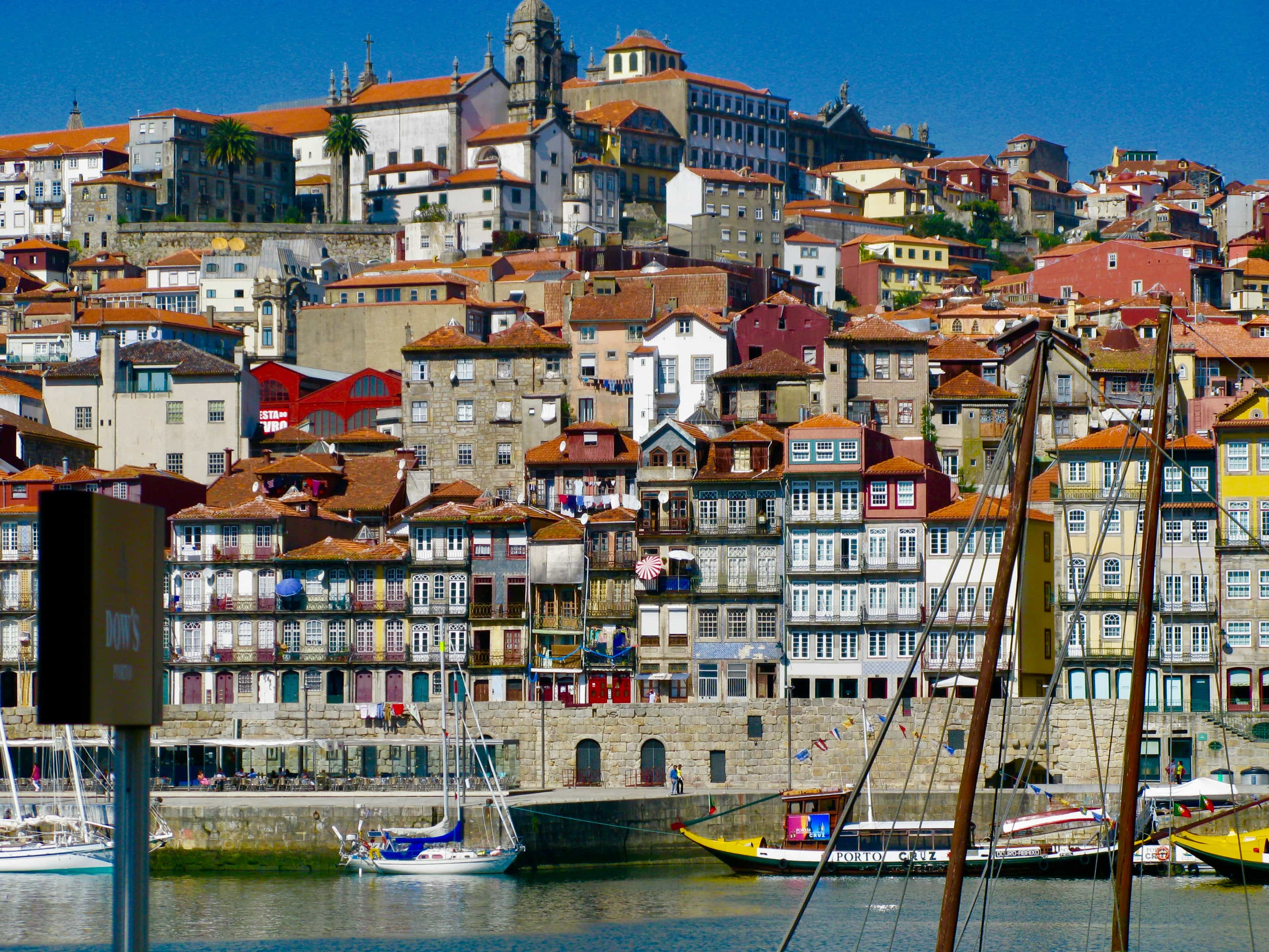
The Ribeira waterfront - the medieval riverside neighbourhood of coloured houses, fish restaurants, and wine bars that gives Porto its most iconic image - is a UNESCO World Heritage Site and the city's social heart. In shoulder season it's navigable; in July–August the narrow riverside alleys fill to capacity with international visitors and the prices on the waterfront restaurants reflect it.
The Dom Luís I bridge - the double-deck iron arch bridge designed by Théophile Seyrig (a Gustave Eiffel collaborator) - connects the Ribeira to Vila Nova de Gaia on the opposite bank. Walking the upper deck gives the best view of both riverbanks and the extraordinary geometry of the city on its hillside. The lower deck has vehicle traffic; the upper deck is pedestrian only and accessible from the Miradouro da Serra do Pilar.
The São Bento railway station, 10 minutes' walk uphill from the Ribeira, has the most extraordinary interior in Porto - 20,000 azulejo tiles depicting scenes from Portuguese history covering the entrance hall walls, installed between 1905 and 1916. Free entry, takes 20 minutes, and utterly unmissable.
Eating in Porto
Porto's cuisine is the most unapologetically Portuguese on the mainland - tripe (tripas), salt cod in dozens of preparations (bacalhau à Gomes de Sá is the Porto original), and the francesinha, Porto's signature dish: a toasted sandwich of meat and sausage covered in melted cheese and a spiced beer-tomato sauce. It's extraordinary and not for the faint-hearted. Café Santiago on Rua Passos Manuel is the benchmark.
Porto Food & Drink Essentials
- Francesinha: Café Santiago for the classic - meat and sausage sandwich under molten cheese and beer sauce. Porto's contribution to world cuisine.
- Bacalhau à Gomes de Sá: The Porto salt cod recipe - flaked cod with potato, egg, olives and onion, baked. At any traditional tasca.
- Tawny Port tasting: Taylor's lodge in Vila Nova de Gaia - the 20-year and 30-year tawnies are extraordinary, served overlooking the Douro.
- Matosinhos seafood: The suburb north of Porto accessible by metro has the finest grilled fish in the region - whole sea bass and bream over charcoal at extraordinarily reasonable prices.
Also Consider
Pairs well with, or alternatives worth comparing:
Comparing your options? Read our detailed Lisbon vs Porto comparison - shoulder season timing, price differences, and an honest verdict on which to visit.
Wondering how much you actually save in shoulder season? Our Shoulder Season Price Report analyses hotel prices across 110 destinations - flights are 37% cheaper, hotels drop 20–50%, and September is the world's most valuable travel month.
Frequently Asked Questions About Porto
- When is the best time to visit Porto? April–May and September–October. Spring has the azalea gardens of the Palácio de Cristal in bloom; autumn keeps warm Atlantic temperatures (18–22°C) with dramatically fewer visitors and hotel prices well below the summer peak. Both avoid Porto's frequent winter rain.
- How many days do you need in Porto? Three days covers the Ribeira, the wine cellars of Vila Nova de Gaia, and the main viewpoints well. Four to five adds the Foz do Douro coastline, the Serralves Museum, and a day trip to the Douro Valley vineyards. A week allows proper immersion in one of Europe's most atmospheric cities.
- Is a Port wine tasting obligatory in Porto? It's one of the genuine pleasures - the historic wine lodges of Vila Nova de Gaia across the Douro from the old city offer cellar tours and tastings that are genuinely excellent and not expensive. Taylor's, Graham's, and Ramos Pinto are the most atmospheric lodges.
- Is Porto more affordable than Lisbon? Generally yes - hotel prices and restaurant costs are typically 15–20% lower than equivalent Lisbon options. Both cities have seen significant price increases in recent years, but Porto remains one of Western Europe's better-value city breaks.
- What is the best viewpoint in Porto? The Miradouro da Serra do Pilar in Vila Nova de Gaia gives the classic Porto view - the Douro, the iron bridges (including Gustave Eiffel's Dom Luís I), and the Ribeira waterfront from across the river. The Miradouro da Vitória in the old city gives the best views over the terracotta rooftops.
Ready to Book?
May is one of the best times to visit Porto. Compare prices now:
We may earn a small commission on hotel bookings at no extra cost to you.
This destination is great for:
Porto vs Lisbon: which should you visit?
Side-by-side comparison - timing, cost, and an honest verdict.
Porto is featured in: