
Crowd preference
How many other tourists is too many?
Best months for atmosphere without overwhelming crowds
Croatia — meaningfully fewer visitors than peak, but the destination is fully open and operating normally. Good balance of atmosphere and accessibility.
When is the Best Time to Visit Croatia?
May and September are Croatia's best months. September wins overall: the Adriatic reaches its annual peak temperature (24-26C, warmer than any July week), hotel prices drop 30-50% from August when European schools return, and Dubrovnik's Old Town becomes genuinely walkable again.
May wins for spring wildflowers, full Plitvice Lakes waterfalls from snowmelt, and prices 35-45% below August with everything fully open. Both months beat July and August on value, crowds, and comfortable sightseeing temperatures.
When is Croatia Peak Season?
Croatia's peak tourist season runs July through mid-August, with the absolute peak in the first three weeks of August. Dubrovnik sees up to 10,000 cruise ship day-visitors simultaneously - the Old Town becomes barely navigable. Hotels charge 2-3 times their shoulder-season rates.
Book 4-6 months ahead for August accommodation on the Dalmatian islands. The main driver is European school summer holidays - French grandes vacances early July to early September, German school holidays staggered July-September.
Is Croatia Hot in Summer?
Yes, particularly in Dubrovnik. July average highs sit at 30-32C, but the limestone Old Town streets trap heat and can feel 5-8C hotter. August regularly exceeds 35C in the city. Humidity is lower than Athens or Rome, making it more bearable. The islands stay slightly cooler with sea breezes.
The Adriatic sea temperature in July is 23-25C, ideal for swimming, so beach-focused holidays in summer work well. It's the sightseeing that suffers most in the summer heat. September drops to a comfortable 22-26C for walking the Old Town.
When is the Best Time to Visit Dubrovnik?
September and October are the best months to visit Dubrovnik. Cruise ship traffic drops sharply after mid-September, the Old Town becomes walkable, the Adriatic is at its warmest (24-26C), and hotel prices fall 30-50% from August peak.
May is the strong spring alternative: warm (22-26C), low crowds, everything open, and prices 35-45% below summer. Avoid late June through August unless you can accept extreme density.
Is September Good for Croatia?
September is Croatia's single best month. The Adriatic sea temperature peaks at 24-26C and stays warm through all of September - warmer than any week in July. European school holidays end in early September, draining most summer crowds within days. Hotel prices drop 30-50% from August.
Island ferries still run full summer schedules through September. Plitvice Lakes' queues shrink dramatically after August 31. September 1-20 is the sweet spot; after September 20 some island businesses start reducing hours.
When Does Croatia Tourist Season End?
Croatia's main tourist season effectively ends September 30. Island ferry schedules reduce in October, some island restaurants close after mid-October, and Plitvice Lakes shifts to autumn opening hours. Split and Dubrovnik function well year-round as city destinations.
Istria (Rovinj, Pula) stays active slightly longer into autumn due to truffle season in October-November. Zagreb operates year-round with Christmas markets running late November through January.
When to Go to Croatia for Good Weather?
For beach and swimming: June through September, with September the best combination of warm sea (24-26C), manageable crowds, and lower prices. For comfortable sightseeing without summer heat: May (22-24C) and September-October (22-26C). For Plitvice Lakes at its most dramatic: May (waterfalls at full snowmelt volume) or October (autumn colour).
Avoid January through March for coastal Croatia - many island businesses close, the sea is cold (13-14C), and some ferry routes reduce.
Best Time to Visit Croatia 2026
Croatia's Dalmatian Coast is one of Europe's most beautiful - and one of its most overwhelmed in summer. Dubrovnik's Old Town becomes impassable by mid-morning in August, Plitvice Lakes runs timed entry tickets, Hvar's beaches are wall-to-wall, and accommodation prices are 40-60% above what you'd pay in shoulder season for the same rooms. The good news: Croatia's shoulder months are genuinely excellent.
May and September are Croatia's finest travel months. Both have warm sea temperatures, fully operational tourist infrastructure, and prices that reflect actual supply and demand rather than peak season premium. September's Adriatic reaches 24-26°C - warmer than any week in July. May has the waterfalls at Plitvice at their most dramatic. Here's the full month-by-month breakdown.
Croatia: month-by-month guide
| Month | Air temp | Sea temp | Rain | Crowds | Price vs Aug | Notes |
|---|---|---|---|---|---|---|
| January | 9°C | 14°C | High | Very low | Lowest | Zagreb Christmas markets (through Jan 7). Coastal towns quiet, many island restaurants closed. Good for city exploration. |
| February | 10°C | 13°C | High | Very low | Lowest | Rijeka Carnival - one of Europe's biggest, colourful parades and costumes. Dubrovnik Winter Festival. Best month for Zagreb museums. |
| March | 13°C | 13°C | Moderate | Low | Low | Spring beginning. Ston Oyster Festival. Dubrovnik Old Town accessible without queues. Some island restaurants still closed. |
| April | 17°C | 14°C | Moderate | Low–Moderate | Low | Tourist season opening. Easter celebrations. Plitvice Lakes at spring wildflower peak. Good hiking weather. Sailing season starting. |
| May | 21°C | 18°C | Low | Moderate | 35-45% below Aug | ★ Best spring month. Fully operational, warm days, Adriatic warming. Hvar lavender beginning. Plitvice at full waterfall flow. Excellent value. |
| June | 25°C | 22°C | Low | High (building) | 20-30% below Aug | Summer season beginning. Ultra Europe festival July 10-12 (avoid Split that week). Hvar lavender harvest and Lavender Festival late June. |
| July | 29°C | 25°C | Minimal | Peak | Highest | Peak season. Ultra Europe July 10-12. Dubrovnik Summer Festival. Hottest month. Beautiful but crowded and expensive. |
| August | 29°C | 26°C | Minimal | Peak | Highest | Peak of peak. Croatians' own summer holiday month. Absolute maximum crowds and prices. Dubrovnik Old Town at saturation. |
| September | 25°C | 24°C | Low | Low–Moderate | 30-50% below Aug | ★★ Best overall month. Sea warmer than July. Schools back = crowds drop sharply. Istrian white truffle season beginning. Excellent all-round. |
| October | 19°C | 21°C | Moderate | Low | 35-50% below Aug | Istrian Truffle Days every weekend. Early October still warm for swimming (21°C). Some island businesses closing late month. Plitvice autumn colour. |
| November | 14°C | 18°C | High | Very low | Near lowest | Shoulder season end. Many coastal businesses closed. Zagreb's Advent (Christmas markets) begin late November - strong reason to visit Zagreb. |
| December | 9°C | 15°C | High | Low (Zagreb: Moderate) | Low (Zagreb: Higher) | Zagreb Advent and Christmas markets - one of Europe's best, rivalling summer pricing in the capital. Coastal towns quiet and largely closed. |
Temperatures are coastal Croatia averages (Split/Dubrovnik). Inland (Zagreb) is cooler in winter, hotter in summer.
Best time by destination
Dubrovnik
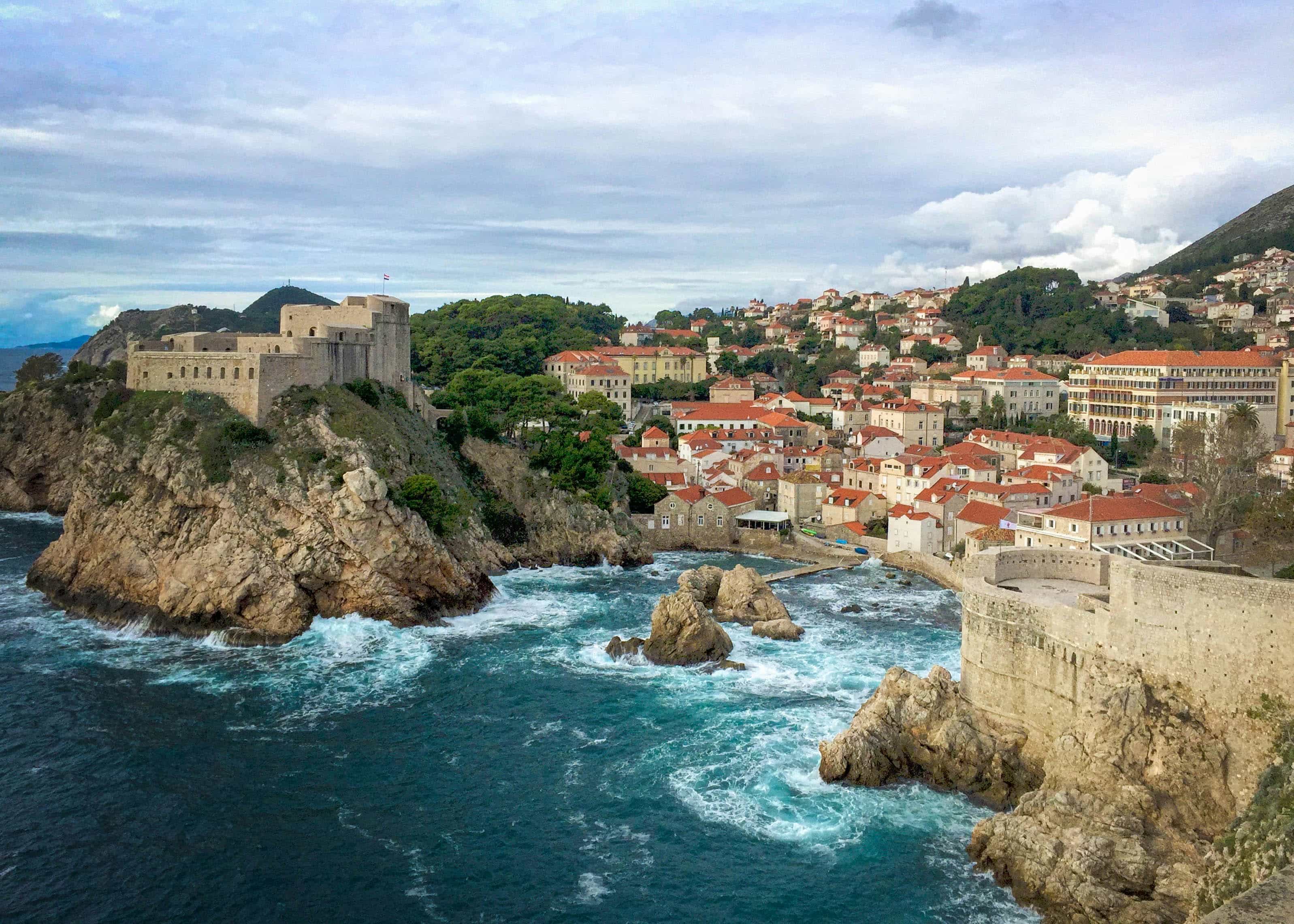
Dubrovnik in July and August is one of Europe's most overcrowded destinations. The Old Town walls become a procession; the limestone streets trap heat to 35°C+; cruise ships dock daily adding thousands of day visitors. September Dubrovnik is transformed - walls walkable in 24°C weather, the Stradun with actual space on it, restaurants taking same-day bookings. May is the spring alternative at 20°C with spring wildflowers and prices 35-45% below August. Note: tourist tax €2.65/night April-September.
Hvar & Dalmatian Islands
Hvar, Brač (Zlatni Rat beach), Korčula, and Vis are all excellent in shoulder season. May has the islands fully operational before the summer crush, with the Adriatic warming to 18-20°C. September has the sea at its warmest (24°C), all ferries running, island restaurants fully open, and accommodation 30-40% cheaper than peak. Vis is particularly rewarding in September - small enough that the crowd drop is dramatic. Island-hopping by catamaran or sailing charter is significantly cheaper from September.
Split & Diocletian's Palace
Split's extraordinary Diocletian's Palace - a Roman emperor's retirement complex converted into a living city - is best experienced in shoulder season when the 4th-century streets aren't a tourist procession. May mornings (before 10am) are extraordinary. Split as a base for day trips to Hvar and Brač is excellent in both shoulder months. The Meštrović Gallery and Archaeological Museum are less crowded year-round but most comfortable in shoulder season.
Plitvice Lakes
Plitvice is one of Europe's most beautiful national parks - 16 terraced lakes connected by waterfalls, UNESCO World Heritage listed since 1979. In July-August it implements timed entry with long queues. May brings the waterfalls at maximum flow (snowmelt) - the most dramatic water volumes of the year. October brings autumn colour reflecting in the lakes - perhaps the most photogenic time of year. Both months are significantly less crowded. Book tickets in advance at np-plitvicka-jezera.hr regardless of month.
Istria (Rovinj, Pula, Poreč)
Istria - Croatia's northern peninsula - has its own rhythm. The Roman amphitheatre in Pula, the walled town of Rovinj, and the olive oil and wine culture of the Istrian interior are excellent in shoulder season. October is Istria's strongest shoulder month: Truffle Days run every weekend through October (Buzet, Motovun, Livade), the olive harvest begins, and the peninsula's extraordinary food culture is at its most active. Rovinj in October - quieter, still warm at 19°C - is one of Croatia's finest experiences.
September: Croatia's finest month
September is when Croatia delivers its best value: summer-quality sea temperatures, operational tourist infrastructure, and accommodation at prices that reflect actual market conditions rather than peak demand. The most important date is approximately September 10, when European schools return - crowds drop nearly overnight while the sea stays warm for another 6 weeks.
Key events & festivals 2026
Crowd levels by month
Crowd levels by month — Croatia
Based on tourism arrival data, search trends & cruise schedules
Crowd ratings are relative to this destination's own peak — not a global scale. How we measure crowds →
Frequently asked questions
When is the best time to visit Croatia?
May and September are Croatia's best shoulder season months. September is the strongest single month: Adriatic sea temperatures peak at 24-26°C (warmer than July), hotel prices drop 30-50% from August, and the summer crowds have gone. May offers spring wildflowers, fully operational tourist infrastructure, and the start of the sailing season at 35-45% below August prices.
Is Croatia too crowded in summer?
In July and August, yes - particularly Dubrovnik, Hvar, and Plitvice Lakes. Dubrovnik's Old Town mid-day in August is genuinely difficult to navigate; cruise ships dock daily and the limestone streets trap heat to 35°C+. September gives you 90% of the summer experience at 50-60% of the price and a fraction of the crowds.
Can you swim in Croatia in September?
Absolutely - September is Croatia's best swimming month. The Adriatic reaches its annual peak temperature (24-26°C) in late August and stays warm through October. Warmer than any July week, with far fewer people on the beaches.
What is the best island to visit in Croatia in shoulder season?
Hvar and Korčula are the strongest shoulder season islands - both fully operational in May and September, with warm sea temperatures, excellent restaurant scenes, and 30-40% below August accommodation prices. Vis is spectacular in September for a quieter alternative. Brač (Zlatni Rat beach) is accessible and excellent in May before the summer rush.
Is Plitvice Lakes worth visiting in shoulder season?
Plitvice is arguably better in shoulder season. May brings the waterfalls at full flow from snowmelt - the most dramatic water volumes of the year. October brings autumn colour reflected in the turquoise lakes. Both months are far less crowded than the timed-entry July-August peak, and the boardwalks are genuinely accessible rather than a procession.
What's the tourist tax in Dubrovnik?
Dubrovnik charges a tourist tax of €2.65 per person per night (April-September) and €1.85 per person per night (October-March). This was introduced to manage visitor numbers and is charged on top of accommodation costs. It's a small addition to the overall cost of a Dubrovnik stay.
Croatia is featured in:
Head-to-head comparisons:
City Guides for Croatia
Month by month shoulder season timing for every Croatia destination we track.