
Best Time to Visit Bangkok 2026: Thailand's Capital Season by Season
Bangkok is the world's most visited city and one of its most rewarding. The Grand Palace and Wat Phra Kaew, the reclining Buddha at Wat Pho, Wat Arun across the Chao Phraya River at dawn - these are temples of extraordinary beauty in a city that takes its Buddhist heritage seriously. Add Bangkok's Chinatown (Yaowarat) for the finest street food in Southeast Asia, a nightlife scene that operates on a different time zone from the rest of the world, and a cost of living that makes extended stays feel like a bargain. The timing question is primarily about temperature and humidity.
Bangkok has three main seasons that create very different experiences. The cool season (November–February) is the most pleasant for exploring temples and street food - temperatures begin around 28–32°C with lower humidity. The hot season (March–May) brings rising temperatures to 38°C+ with very little rain but intense heat. The rainy season (June–October) delivers tropical climate with heavy showers, typically in late afternoons, at the lowest hotel prices of the year.
Cool Season November–February: Bangkok at Its Best
November in Bangkok is the ideal shoulder month - the rainy season has ended, temperatures drop to a manageable 28–32°C, and the December–January influx of European and Australian visitors hasn't yet driven up hotel prices. The Loy Krathong Festival falls in November (full moon night) - paper lanterns released into the sky and lotus-shaped krathong floats set on the Chao Phraya River create one of Thailand's most beautiful annual spectacles.
February is the other shoulder sweet spot - the peak season is winding down, temperatures are still in the cool season range (28–33°C), and Chinese New Year celebrations transform Bangkok's Chinatown into one of Southeast Asia's greatest festival experiences. The lion dances, the street market extending the length of Yaowarat Road, and the extraordinary density of food and energy make it one of Bangkok's great free events.
Cool Season Bangkok Highlights
- Loy Krathong Festival (November full moon): Lanterns on the Chao Phraya riverbank - one of Thailand's most beautiful traditions.
- Chinese New Year (January/February): Bangkok's Chinatown transforms - lion dances, extraordinary food, festival energy at its peak.
- Visiting temples comfortably: The Grand Palace, Wat Pho, and Wat Arun are manageable in cool season temperatures that make the exposed courtyards pleasant rather than punishing.
- Chatuchak Weekend Market: The cool season makes Bangkok's legendary 15,000-stall market navigable - open Saturday and Sunday.
Hot Season March–May: Very Little Rain, Intense Heat
March begins the hot season - temperatures rise from the cool season's 30°C towards 35–38°C by April, with very little rain but intense heat and rising humidity. Songkran (Thai New Year) falls on April 13–15 - the city's most extraordinary cultural event, a nationwide water festival where water fights break out across the city and the streets of Silom and Khao San Road become continuous drenching zones. It's genuinely extraordinary and chaotic - hotel prices spike and the traffic becomes even more challenging than usual.
The hot season is the cheapest time for hotels (outside Songkran week itself) and flights to Bangkok. For visitors who can manage the heat - staying in air-conditioned accommodation, planning outdoor sightseeing for early mornings and late afternoons - it's entirely viable. The east coast beaches of Koh Samui and the west coast beaches accessible from Bangkok have their own seasonal patterns different from the city.
Visiting Bangkok's Temples
Wat Phra Kaew and the Grand Palace is Bangkok's most visited site - the Temple of the Emerald Buddha within the spectacular palace complex. Arrive at 8:30am opening and the first 45 minutes are relatively uncrowded. Dress code is strictly enforced (knees and shoulders covered) - sarongs are available for rent at the entrance. Allow 2–3 hours.
Wat Pho, immediately adjacent, houses the 46m reclining Buddha - an extraordinary gold figure filling an entire temple hall. Wat Pho is also the origin of traditional Thai massage; the school here offers the most authentic massage in the city at 300 baht per hour.
Wat Arun (Temple of Dawn) across the Chao Phraya is best seen from the opposite bank at sunset, when the ceramic-encrusted spire catches the light. The 3-baht ferry from Tha Tien pier takes 2 minutes. For visiting temples - do it in the early mornings before the heat builds, especially in the hot season.
Bangkok Neighbourhoods
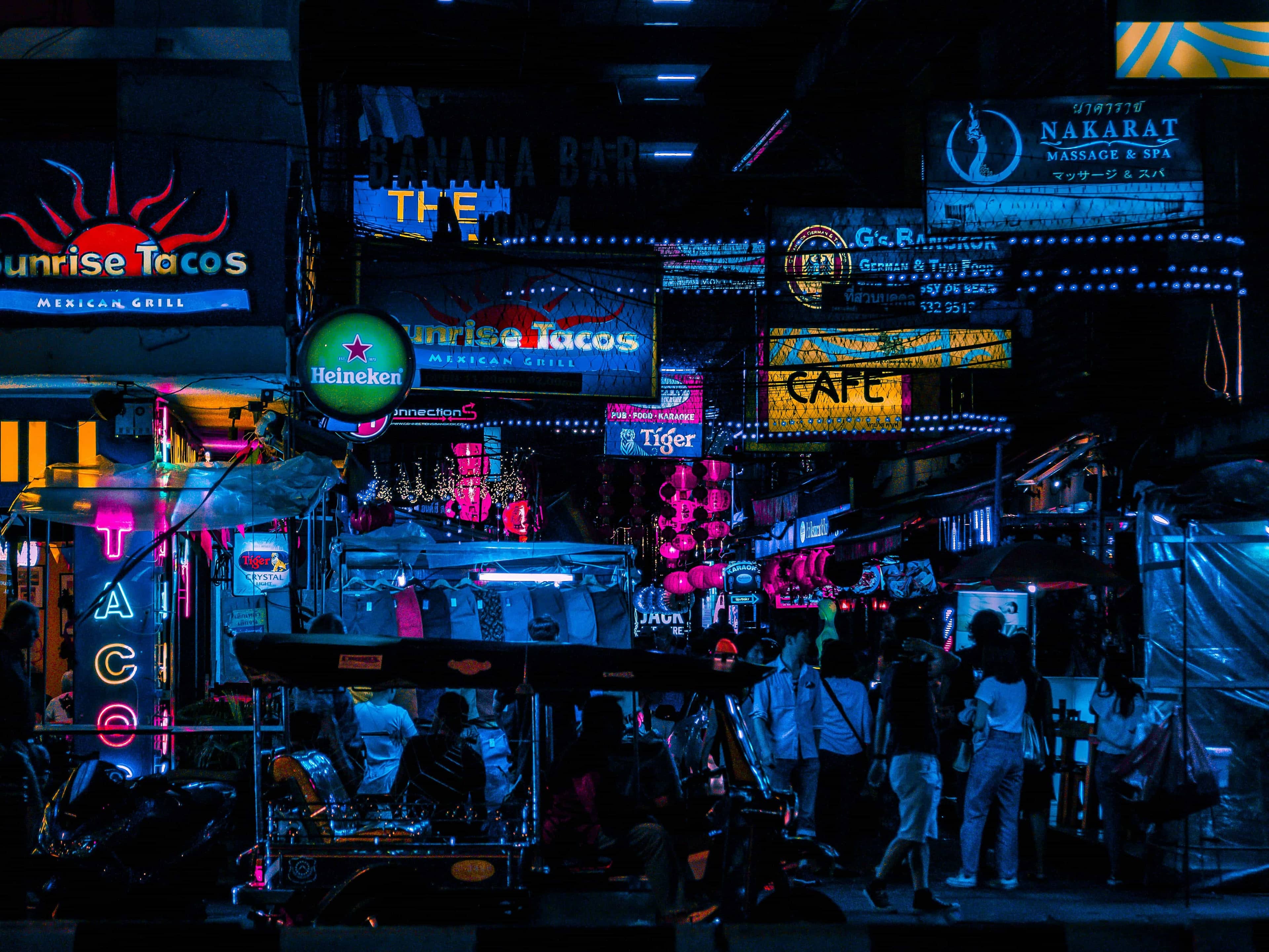
Yaowarat (Chinatown) is Bangkok's greatest street food destination - the streets fill with food stalls from 6pm serving crab omelette, roast duck, and extraordinary seafood. Chinese New Year here is extraordinary; on any other evening it's still excellent.
Sukhumvit is the most international stretch - Thong Lo (Soi 55) and Ekkamai (Soi 63) are where Bangkok's young professionals eat and socialise, with excellent independent restaurants at better value than the tourist-facing streets.
Ari (north on the BTS Skytrain) is Bangkok's most liveable neighbourhood - café culture, excellent restaurants, local residents, and none of the tourist-facing infrastructure. An excellent base for longer stays combining Bangkok with Koh Samui or Thailand's beaches.
Eating in Bangkok
Bangkok Food Essentials
- Pad kra pao: Basil stir-fry with rice and fried egg - the de facto national dish at 60–100 baht (£1.50–2.50) from any street vendor. Order with kai dao (fried egg on top).
- Yaowarat at night: Bangkok's Chinatown street food from 6pm - crab omelette, oyster noodles, roast duck. The city's greatest evening food experience.
- Jay Fai: Michelin-starred street cart - the crab omelette is extraordinary. Queue from 3pm for the 7pm opening or book months ahead online.
- Or Tor Kor Market: The premium fresh market near Chatuchak - extraordinary produce and prepared food for morning eating.
Also Consider
Pairs well with, or alternatives worth comparing:
Comparing your options? Read our detailed Bali vs Thailand comparison - shoulder season timing, price differences, and an honest verdict on which to visit.
Wondering how much you actually save in shoulder season? Our Shoulder Season Price Report analyses hotel prices across 110 destinations - flights are 37% cheaper, hotels drop 20–50%, and September is the world's most valuable travel month.
Frequently Asked Questions About Bangkok
- When is the best time to visit Bangkok? November–February is Bangkok's cool season - temperatures of 28–32°C with lower humidity, the most pleasant weather for exploring temples and Bangkok's Chinatown. November is the shoulder month before December–January peak prices; February catches the city before the hot season begins.
- What are Bangkok's three main seasons? Cool season (November–February): best weather, 28–32°C, low humidity. Hot season (March–May): rising temperatures to 38°C+, very little rain but intense heat. Rainy season (June–October): tropical climate with heavy showers, typically in late afternoons - still very much visitable.
- Is Bangkok's rainy season a problem? Less than many expect. The torrential rain of June–October typically falls in short, intense bursts - usually late afternoon - rather than all-day rain. Mornings are often clear. The rainy season offers lower hotel prices, lush green landscapes outside the city, and fewer tourists. Carry a good umbrella.
- What is the Loy Krathong Festival? Loy Krathong (November full moon) is one of Thailand's most beautiful traditions - paper lanterns released into the sky and lotus-shaped floats set on water. The Chao Phraya riverbank in Bangkok has extraordinary celebrations. Combined with Yi Peng (sky lanterns) in Chiang Mai, it's one of Southeast Asia's great annual spectacles.
- What is Bangkok's Chinatown like? Yaowarat (Bangkok's Chinatown) is the city's greatest street food destination - the streets around Yaowarat Road fill with food stalls from 6pm serving crab omelette, roast duck, oyster noodles, and extraordinary seafood. Chinese New Year (January–February) transforms it into one of Southeast Asia's greatest festival experiences.
Ready to Book?
November is one of the best times to visit Bangkok. Compare prices now:
We may earn a small commission on hotel bookings at no extra cost to you.
Bangkok vs Bali: which should you visit?
Side-by-side comparison - timing, cost, and an honest verdict.
If You Like Bangkok, Also Consider…
Also see: Best time to visit Thailand →
Bangkok is featured in: