
Crowd preference
How many other tourists is too many?
Best months for atmosphere without overwhelming crowds
Singapore — meaningfully fewer visitors than peak, but the destination is fully open and operating normally. Good balance of atmosphere and accessibility.
Best Time to Visit Singapore 2026: Year Round City, Smarter Timing
Singapore sits 137km north of the equator - close enough that it doesn't have seasons in the conventional sense. This island nation is warm (28–33°C) and humid year round, the city's skyline is spectacular in every month, and the efficient public transport system, world-class museums, and hawker food culture operate continuously. What changes is the rainfall pattern. Getting the timing right in Singapore means understanding the northeast and southwest monsoons, and finding the windows between them.
February–April is Singapore's sweet spot - the northeast monsoon has ended, the inter-monsoon period brings the most reliably sunny skies of the year, and Chinese New Year celebrations (January–February) make it the most spectacular time to experience the city's Chinese culture. The Singapore Botanic Gardens and National Orchid Garden are extraordinary in the clear spring light.
Singapore's Monsoon Seasons Explained
Singapore has two monsoon seasons that define the year. The northeast monsoon (December–March) brings the heaviest rainfall - December and January are the wettest months, with frequent heavy showers in the afternoon and evening. The southwest monsoon (June–September) is actually drier in Singapore than the northeast - the Malay Peninsula shelters the island, making June–August more pleasant than the December–January period.
The inter-monsoon periods (April–May and October–November) bring the most unpredictable weather - short, intense Sumatra squalls at any time of day. But Singapore's tropical weather means even heavy showers typically clear within an hour, and the city's covered walkways and air conditioning make wet days entirely manageable.
| Period | Temp | Rainfall | Verdict |
|---|---|---|---|
| Feb–Apr (inter-monsoon) | 27–32°C | Low–moderate | Best window - sunny skies, Chinese New Year, pleasant temperatures |
| May–Jun | 28–33°C | Moderate | Warm, occasional squalls, Great Singapore Sale begins |
| Jul–Aug (SW monsoon) | 27–32°C | Low–moderate | Singapore Food Festival, National Day - reliably drier |
| Sep–Nov (inter-monsoon) | 27–33°C | Moderate–high | Hungry Ghost Festival, unpredictable squalls |
| Dec–Jan (NE monsoon) | 25–30°C | High | Wettest months - Christmas lights, festive season, Chinese New Year building |
Singapore's Cultural Festivals
Singapore's cultural calendar is one of its great strengths - a genuinely multicultural city where Chinese, Malay, Indian, and colonial heritage create distinct festivals throughout the year.
Key Singapore Cultural Events
- Chinese New Year (Jan–Feb): Chinatown transforms with light displays and decorations. The river hongbao at Marina Bay and the Chingay parade are extraordinary. The most spectacular time to visit Singapore's Chinese cultural heritage.
- Hari Raya Aidilfitri (date varies): Geylang Serai transforms with a Ramadan bazaar and festive lights - one of Singapore's most atmospheric neighbourhood experiences.
- Singapore Food Festival (July): The island's extraordinary hawker culture and restaurant scene celebrated across multiple events - local dishes, chef collaborations, and food trails.
- National Day (August 9th): Singapore's independence celebration - the National Day Parade at the Padang with extraordinary fireworks visible from Marina Bay.
- Hungry Ghost Festival (July–August): The seventh lunar month brings street performances and offerings throughout the city - a fascinating window into traditional Chinese belief.
- Christmas lights, Orchard Road (Nov–Jan): The shopping district's Christmas light-up is genuinely spectacular - one of Asia's finest festive seasons.
Singapore's Unmissable Attractions
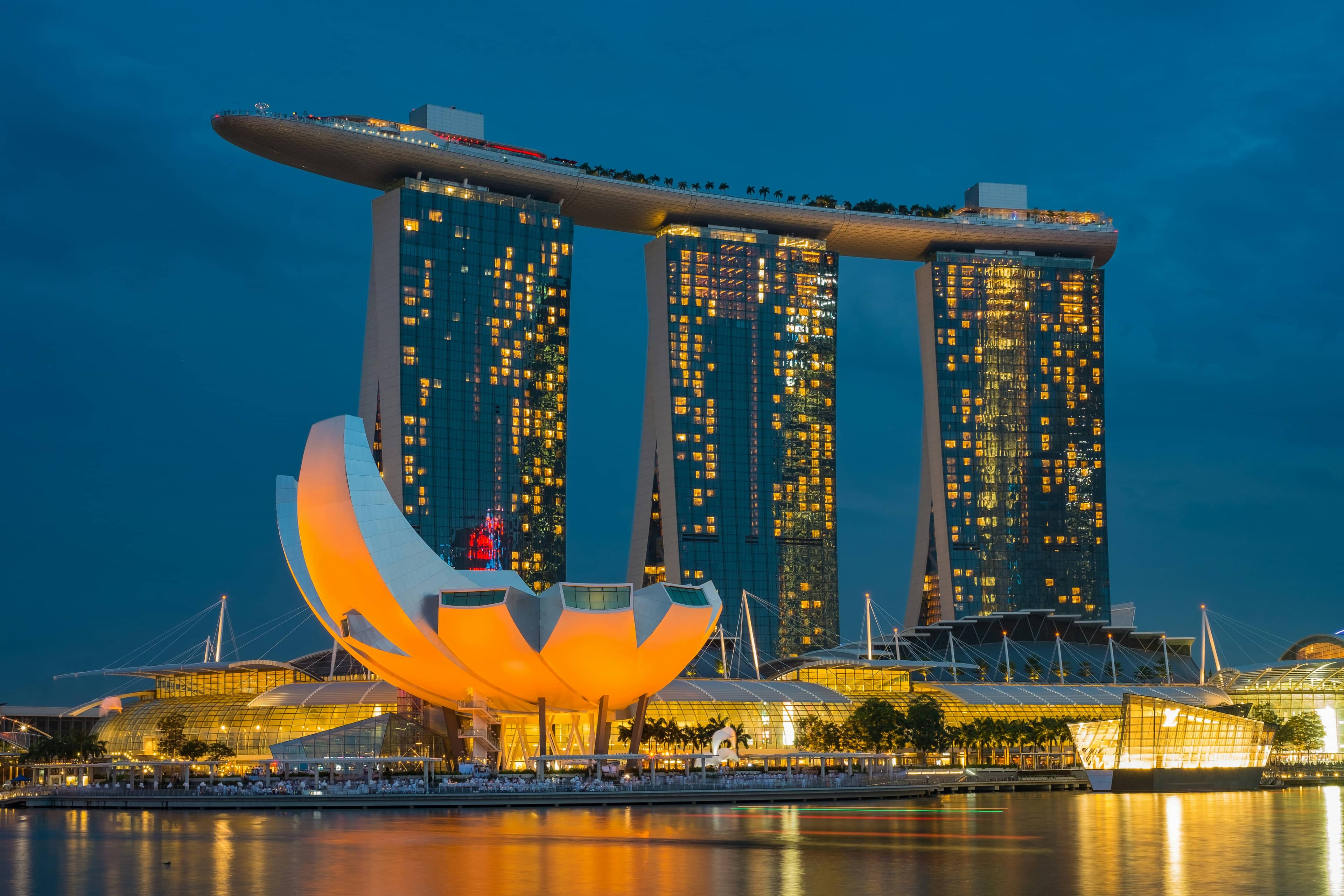
Marina Bay Sands defines Singapore's skyline - the three-tower hotel with its extraordinary rooftop SkyPark (observation deck open to non-guests) gives the best panoramic view of the city. The ArtScience Museum at its base has world-class exhibitions. The Marina Bay waterfront walk connects the Merlion, the Helix Bridge, and Gardens by the Bay in a spectacular evening circuit.
Gardens by the Bay - the two glass-domed conservatories (Flower Dome and Cloud Forest) are extraordinary, and the Supertree Grove light show at 7:45pm and 8:45pm nightly is one of the world's great free urban spectacles. The Cloud Forest's 35m indoor waterfall in a climate-controlled mountain forest is genuinely one of the most extraordinary indoor spaces in Asia.
Singapore Botanic Gardens and National Orchid Garden - the Botanic Gardens are a UNESCO World Heritage Site and one of the finest tropical gardens in the world. The National Orchid Garden within them has over 1,000 orchid species and 2,000 hybrids. The gardens are best visited in the early morning before heat builds - free entry to the main gardens, modest charge for the Orchid Garden.
Singapore Zoo and Jurong Bird Park - Singapore Zoo is consistently ranked among the world's best, with open-concept enclosures where animals are separated from visitors by moats rather than bars. The Night Safari adjacent to it is Asia's first nocturnal wildlife park - genuinely extraordinary after dark. Jurong Bird Park (now Bird Paradise at Mandai) has 3,500 birds in extraordinary aviaries.
Singapore's Neighbourhoods
Little India is Singapore's most atmospheric neighbourhood - the temples of Serangoon Road, the extraordinary 24-hour Tekka Centre hawker market, the spice shops and flower garland sellers, and a sensory density that makes it feel like South India transposed to a Southeast Asian island. Best on a Sunday when the neighbourhood is at its most lively.
Chinatown has the Sri Mariamman Temple (a Hindu temple in the middle of Chinatown, built by the Tamil community - one of Singapore's great architectural surprises), the Buddha Tooth Relic Temple, and the Maxwell Food Centre hawker complex. The Chinatown Street Market transforms during Chinese New Year into one of Singapore's most spectacular public spaces.
Clarke Quay and the Singapore River - the historic quay area has been converted into a restaurant and bar district along the river. The river taxi (bumboat) connects Clarke Quay to Boat Quay and Marina Bay - a pleasant way to see the city's skyline from water level.
Sentosa Island - connected to the mainland by cable car, causeway, and monorail. Universal Studios Singapore, the beach clubs, and Adventure Cove Waterpark make it the city's leisure destination. Best avoided on weekends when it fills with locals. The cable car from Mount Faber gives extraordinary harbour views.
Singapore's Hawker Culture
Singapore's hawker centres are a UNESCO-recognised cultural heritage - the government-maintained covered markets where generations of hawkers have perfected single dishes over decades. Hainanese chicken rice, laksa, char kway teow, and chilli crab are the national benchmarks, available at extraordinary quality for SGD$4–8 at any good hawker centre.
Singapore Food Essentials
- Chilli crab: Singapore's most famous dish - Sri Lankan crab in sweet-spicy tomato sauce. Jumbo Seafood or No Signboard Seafood for the classic version. Expensive but essential once.
- Hainanese chicken rice: Tian Tian at Maxwell Food Centre - the most famous chicken rice stall in Singapore. The queue moves fast.
- Laksa: 328 Katong Laksa - the Katong version eaten with a spoon, extraordinarily rich coconut curry broth with cockles.
- Kaya toast breakfast: Ya Kun Kaya Toast for the traditional breakfast of toast with coconut-pandan jam, runny eggs in soy sauce, and thick local coffee.
- Food stalls at Lau Pa Sat: The restored Victorian cast-iron market in the CBD - good all-day eating, extraordinary satay stalls in the evening on the surrounding streets.
Getting Around Singapore
Singapore's efficient public transport - MRT metro, buses, and the EZ-Link card (or contactless bank card via SimplyGo) - covers virtually every attraction cheaply. Changi Airport (consistently rated the world's best) connects to the city centre via MRT in 30 minutes for under SGD$3. Grab (ride-hailing) is cheap and reliable for areas not well-served by MRT. Air conditioning is ubiquitous - the covered walkway network between MRT stations, malls, and office buildings means you can traverse large parts of the city centre without going outside in the heat.
Also Consider
Pairs well with, or alternatives worth comparing:
Wondering how much you actually save in shoulder season? Our Shoulder Season Price Report analyses hotel prices across 110 destinations - flights are 37% cheaper, hotels drop 20–50%, and September is the world's most valuable travel month.
Frequently Asked Questions About Singapore
- When is the best time to visit Singapore? February–April is Singapore's driest period - the northeast monsoon has ended and the southwest monsoon hasn't begun. This is also when Chinese New Year transforms the city. June–August is the second drier window. Singapore is genuinely a year round destination - the tropical climate means no month is off-limits, but February and March have the most pleasant temperatures and fewest heavy showers.
- Does Singapore have a dry season? Singapore's dry season runs roughly February–April (inter-monsoon, post-northeast monsoon) and June–August (during the southwest monsoon, which brings less rain to Singapore than the northeast). No month is truly dry - Singapore gets rain year round - but these windows have fewer heavy showers and more sunny skies.
- What is Singapore like during Chinese New Year? Chinese New Year (January or February, depending on the lunar calendar) is Singapore's most spectacular festival - Chinatown transforms with elaborate decorations and light displays, the river hongbao celebration fills Marina Bay, and the city has an extraordinary festive energy. Hotels fill up; book ahead.
- Is Singapore worth visiting despite the humidity? Absolutely. The high humidity is year round and manageable - light clothing, air conditioning everywhere, and the habit of moving between indoor and outdoor spaces. The efficient public transport system, world-class museums, hawker food culture, and the extraordinary density of things to do make it one of Asia's great city destinations regardless of season.
- What is the Singapore Food Festival? The Singapore Food Festival in July celebrates the city's extraordinary culinary heritage - hawker culture, local dishes, and chef collaborations across the island. Combined with the Great Singapore Sale (June–August) which fills Orchard Road and the shopping districts with deals, the mid-year window has strong reasons to visit despite the monsoon season.
Ready to Book?
February is one of the best times to visit Singapore. Compare prices now:
We may earn a small commission on hotel bookings at no extra cost to you.
This destination is great for:
Singapore is featured in: