
Crowd preference
How many other tourists is too many?
Best months for atmosphere without overwhelming crowds
Hanoi — meaningfully fewer visitors than peak, but the destination is fully open and operating normally. Good balance of atmosphere and accessibility.
Best Time to Visit Hanoi 2026: Vietnam's Ancient Capital at Its Best
Hanoi is one of Southeast Asia's most fascinating capitals - a city of 1,000-year continuous history where French colonial boulevards and ancient lakes sit alongside the extraordinary Old Quarter's 36 trading streets and the magnificent Temple of Literature. It's also a city with a specific climate challenge: the summer months bring oppressive heat and heavy monsoon rain, and the December–February cool season (cold by Vietnamese standards, 15–20°C) can feel grey and damp. Getting the timing right unlocks a city of extraordinary texture.
October–November is Hanoi's golden window. The summer monsoon has ended, temperatures settle at 24–28°C, skies clear, and the lakes and parks of the city take on an extraordinary quality of light. The Old Quarter is at its most navigable. The street food culture - one of the world's great culinary traditions at prices that feel implausible to Western visitors - operates at full intensity.
Hanoi in October & November: The Best Season
October in Hanoi has a specific quality that Vietnamese call "mùa thu Hà Nội" - Hanoi autumn. The light is clear and golden, the temperature ideal (26°C), and the city's extraordinary trees (the yellow-leaved sua trees lining the French Quarter boulevards) begin their colour change. The Hoan Kiem Lake and its restored Turtle Tower, the 11th-century Temple of Literature with its banyan trees, and the West Lake at dawn with its lotus flowers take on a particular quality in October light.
The Hanoi streets food culture is year-round but October–November is when eating outside is genuinely pleasurable without the summer heat or winter chill. Bun cha (grilled pork with noodles and dipping broth) eaten at a pavement restaurant, pho from a 50-year-old family recipe at a stall that has occupied the same corner for generations, and banh mi from the street vendors who appear at dawn - this is the version of Hanoi worth planning the trip around.
The Old Quarter
Hanoi's Old Quarter - the 36 ancient trade streets of the merchant city that grew up north of Hoan Kiem Lake - is one of Asia's most extraordinary surviving historic urban environments. Each street was historically associated with a single trade: Hang Bac (Silver Street), Hang Gai (Silk Street), Hang Thiec (Tin Street), Hang Ma (Paper and votive goods Street). The trade associations have partly dissolved but the character of each street remains distinct.
The best time to explore the Old Quarter is the early morning - from 6am, the streets belong to residents rather than visitors. Women vendors carrying shoulder poles with fresh produce, men drinking ca phe trung (egg coffee) at tiny street-side cafés, and the 2,000-year-old Bach Ma Temple open for morning prayers. By 9am the tourist traffic begins to build.
Old Quarter Essentials
- Early morning walk (6–8am): The Old Quarter before tourist infrastructure activates - the city's actual morning rhythm.
- Dong Xuan Market: The Old Quarter's covered wholesale market - four floors of everything from fresh produce to textiles. Best on weekday mornings.
- Hoa Lo Prison Museum: The former French colonial prison (nicknamed "Hanoi Hilton" by American POWs) - an extraordinary and sobering museum of colonial and wartime history.
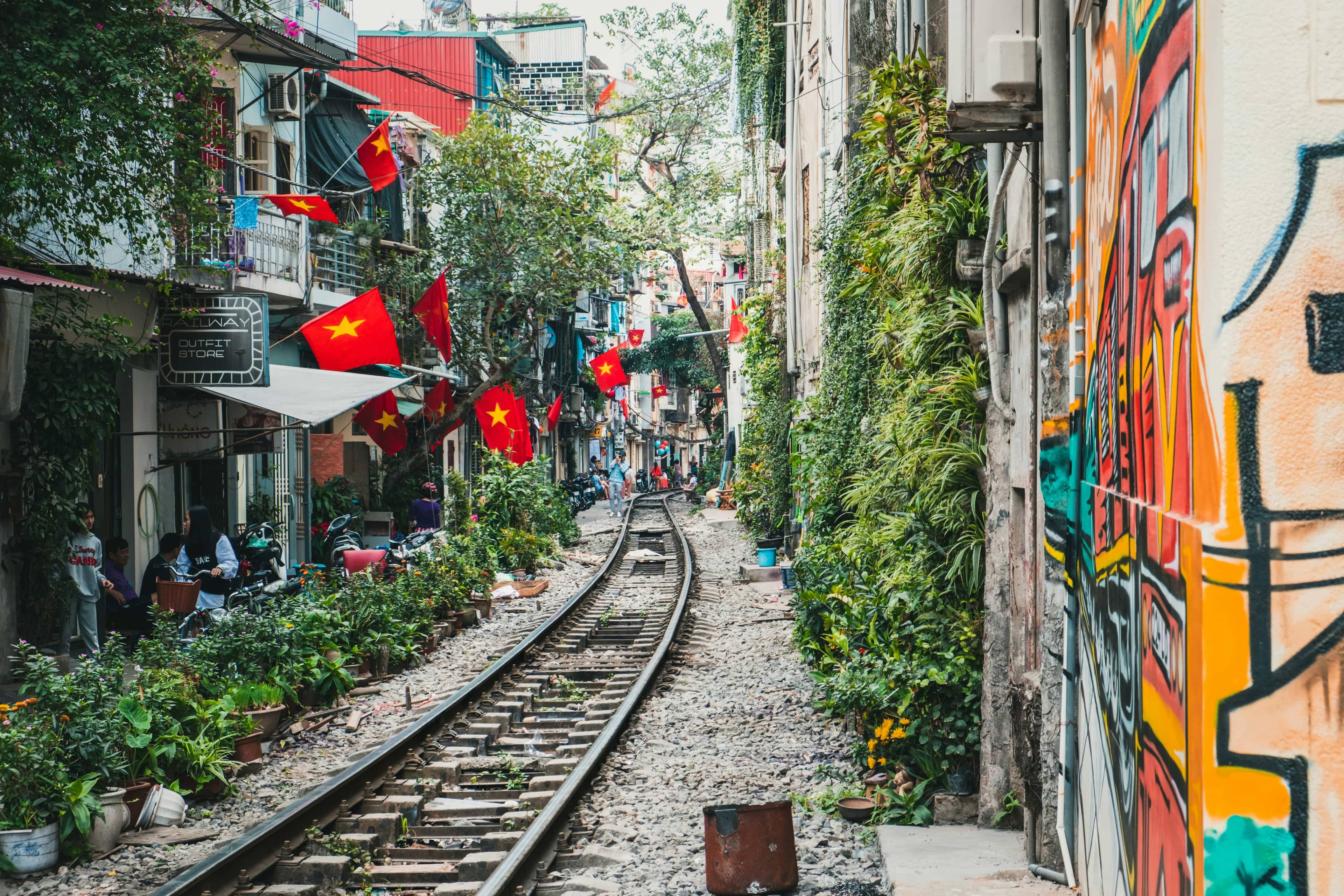
- Train Street: The residential street where the Hanoi-Saigon express passes through at arms' length from the houses - best seen by the residents as a daily occurrence rather than staged for tourists.
Eating in Hanoi
Hanoi's food culture is distinct from southern Vietnamese cuisine - lighter, more herb-forward, and built around a few dishes perfected over generations. Pho bo (beef noodle soup) is the national dish and in Hanoi it's a morning meal - the broth simmered overnight from beef bones and spices, served with thin rice noodles, fresh herbs, and lime. Pho Bat Dan on Bat Dan Street opens at 6am and has a queue by 6:30am. That queue is worth joining.
Hanoi Food Essentials
- Pho: Pho Bat Dan on Bat Dan Street - the most celebrated pho in Hanoi, opens 6am, sells out by 10am. Standing only, no English menu, point at what others have.
- Bun cha: Grilled pork meatballs and belly in sweet-sour broth with noodles and herbs - Bun Cha Huong Lien (where Obama ate with Anthony Bourdain in 2016) is on Le Van Huu Street.
- Banh mi: Banh Mi 25 on Hang Ca Street - the best banh mi in the Old Quarter, pork pâté and fresh herbs in a baguette for under £1.
- Ca phe trung (egg coffee): Cafe Giang on Nguyen Huu Huan Street - the original egg coffee, invented here in 1946. Whisked egg yolk and condensed milk over strong coffee. Essential.
Day Trips from Hanoi
Halong Bay (4 hours) is Vietnam's most famous natural sight - thousands of limestone karst islands rising from the Gulf of Tonkin, explored by junk boat. A 2-night cruise (departing Monday or Tuesday for fewer other boats) is the proper way to see it. October–November is peak season for Halong Bay - calm water, clear visibility, and the best conditions for kayaking the sea caves.
Ninh Binh (2 hours by bus) is the inland version of Halong Bay - limestone karsts rising from rice paddies, explored by rowboat through river caves. Far fewer visitors than Halong Bay and extraordinary scenery. The ancient capital of Hoa Lu and the Bai Dinh pagoda complex are nearby.
Also Consider
Pairs well with, or alternatives worth comparing:
Wondering how much you actually save in shoulder season? Our Shoulder Season Price Report analyses hotel prices across 110 destinations - flights are 37% cheaper, hotels drop 20–50%, and September is the world's most valuable travel month.
Frequently Asked Questions About Hanoi
- When is the best time to visit Hanoi? October–November and March–April. Autumn brings clear skies and warm days (24–28°C) after the summer monsoon - the city's finest weather window. Spring is warm (18–24°C) before the summer heat and humidity. Both avoid the December–February cold and the June–August rainy season.
- Is Hanoi safe? Generally yes. Traffic is the biggest hazard - crossing Hanoi's streets requires reading the flow and walking steadily (drivers get around around pedestrians who move predictably). Petty theft warrants normal precautions. The Old Quarter is safe to walk at any hour.
- How cheap is Hanoi? Extremely - one of Southeast Asia's best value destinations. Street food costs £0.50–2. Excellent local restaurants £3–8. Hotels average £30–60/night in shoulder season. Budget travellers can live very well on £25–35/day; comfortable travel on £50–70.
- How do I get to Halong Bay from Hanoi? Halong Bay is 4 hours from Hanoi by road. Most visitors book a 2-night cruise through a reputable operator - the bay's limestone karst landscape is extraordinary and best seen from the water. Day trips are possible but don't do justice to the overnight experience.
- What is Hanoi's Old Quarter like? Extraordinary - 36 streets each historically associated with a particular trade (Silk Street, Tin Street, Paper Street), now a mixture of traditional crafts, street food, and tourist infrastructure. Best explored on foot in the early morning before the street food vendors clear and the day-tripper traffic builds.
Ready to Book?
March is one of the best times to visit Hanoi. Compare prices now:
We may earn a small commission on hotel bookings at no extra cost to you.
Hanoi is featured in: