
Crowd preference
How many other tourists is too many?
Best months for atmosphere without overwhelming crowds
Prague — meaningfully fewer visitors than peak, but the destination is fully open and operating normally. Good balance of atmosphere and accessibility.
Comparing your options? Read our detailed Prague vs Vienna comparison — shoulder season timing, price differences, and an honest verdict on which to visit.
Shoulder Season Prague 2026: Best Time to Visit for Fewer Crowds & Big Savings
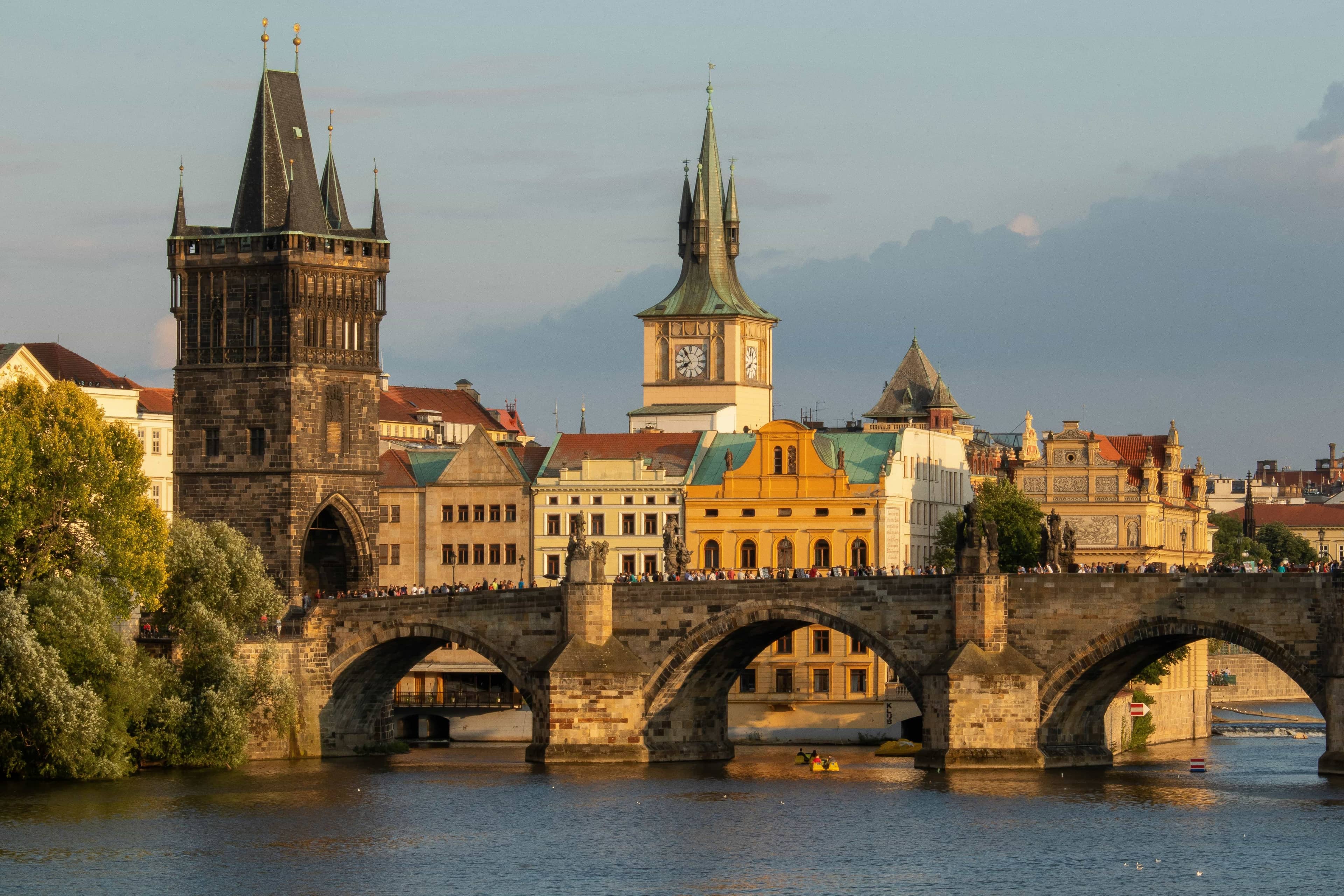
Prague is one of Europe's most beautiful cities and one of its most crowded in summer. The Charles Bridge in July is wall-to-wall tourists by 9am; the same bridge at dawn in May or October is one of Europe's great experiences. The shoulder season case for Prague is straightforward: May and September–October give you the medieval architecture, the beer, and the castle views at 25–35% less cost and dramatically less competition.
Prague Shoulder Season at a Glance
When is Shoulder Season in Prague?
Prague's tourist season peaks in July and August when the historic centre — compact and extraordinarily preserved — becomes genuinely difficult to navigate. The shoulder seasons bracket this peak: April–May in spring and September–October in autumn. Both offer 25–35% lower hotel prices than July, manageable crowds at the main sights, and weather that's actually more comfortable for walking than the summer heat.
Spring shoulder (May)
18–22°C
25–30% below July
Prague Spring Music Festival. Cherry blossoms on Petřín Hill. Long evenings. Best overall month.
Autumn shoulder (Sep–Oct)
14–20°C Sep / 9–15°C Oct
20–35% below July
October wine harvest in Bohemia. Foliage on Petřín and Stromovka. Prague International Jazz Festival (October).
Winter (Nov–Feb)
0–7°C
30–45% below July
Cheapest months. Christmas markets November–January. Beautiful in snow. Book December weekends far ahead.
Spring (April–May): Prague's Finest Shoulder Season
May is Prague's strongest shoulder season month. The city is fully operational — every restaurant, museum, and tour open — but before the summer influx. Temperatures average 18–22°C, ideal for the walking that Prague demands: castle district climbs, Vinohrady café culture, riverside walks past the National Theatre.
The Prague Spring International Music Festival runs from mid-May to early June, beginning each year with a procession from Smetana Hall to Vyšehrad and a performance of Má vlast. It's one of Europe's finest classical music festivals and adds a specific cultural anchor to a May visit.
Cherry blossoms on Petřín Hill (April–early May) make the overlooked western hill one of Prague's most beautiful spring experiences — the funicular railway and the views over the red rooftops toward the castle are extraordinary in blossom season.
April note: Easter weekend (April 2–5, 2026)
Easter in Prague is a genuine cultural event — folk markets on Old Town Square and Wenceslas Square, traditional egg decorating, and Czech Easter bread (mazanec). The flip side: it's one of the busiest and most expensive short weekends of the year. Book accommodation 8–10 weeks ahead if Easter is your target, or arrive the week after for the same seasonal atmosphere without the surge.
Autumn (September–October): Harvest Season and Foliage
September is still warm enough (17–21°C) for outdoor dining and comfortable sightseeing while summer crowds thin noticeably after the school term starts. The Bohemian wine harvest in September and October is less dramatic than France or Italy but genuinely pleasant — the Mělník wine region (45 minutes north of Prague) produces Bohemia's finest wines and opens its cellars for harvest visits.
October brings the Prague International Jazz Festival and the city's autumn foliage — Petřín Hill, Stromovka Park, and the castle gardens all turn russet and gold. Hotel prices drop to their lowest since spring. October is quieter than September and arguably the best budget month in the shoulder season, with the added atmosphere of pre-winter cosy café culture.
Summer: How Crowded, and What to Do About It
Prague in July and August is genuinely very crowded in the historic core. The Old Town Square fills completely by 10am. The Charles Bridge — 500 metres long — can have 1,000+ tourists on it at peak times. The astronomical clock draws a crowd for every hour. Wenceslas Square and the tourist-facing streets (Karlova, Nerudova) are dense with visitors and souvenir shops.
If summer is unavoidable: the solution is timing. The Charles Bridge before 7am is genuinely beautiful and almost empty. The castle opens at 6am for the grounds (tickets needed for interiors). The Old Town Square at 8am has café tables available. Prague rewards early risers in July just as much as shoulder season visitors in October — the architecture is the same; only the crowd varies.
Winter: Christmas Markets and Budget City Breaks
Prague in winter is underrated. The Christmas markets on Old Town Square and Wenceslas Square (running late November through early January) are among Europe's finest — the Gothic and Baroque backdrop makes the combination of stalls, mulled wine (svařák), and chimney cake (trdelník) genuinely atmospheric rather than merely commercial.
January and February are Prague's cheapest months — hotel prices 30–45% below July peak, flights from the UK under £100 return regularly, and the museums and galleries completely uncrowded. The city is cold (0–5°C) but beautiful in snow, and Czech hospitality (warm pubs, excellent dark beer, hearty svíčková) is particularly appealing in winter.
December warning: the Christmas market period (particularly December weekends) sees prices spike back toward summer levels. Early December (1–15) and post-Christmas (December 27–31) are better value than the Christmas weekend itself.
Prague Month by Month
January
−2 to 4°CCheapest month. Museums empty. Christmas market deals. Cold but beautiful in snow. Post-holiday quiet.
February
0 to 6°CStill cheap. Occasional snow. Prague Burns festival (alternative culture). Valentine's weekend modest uptick.
March
4 to 11°CSpring arriving. Prices rising. Still quiet early March. Czech Easter preparations begin. Good value.
April ⭐
8 to 16°CEaster weekend April 2–5 (busy, book ahead). Otherwise excellent spring shoulder. Cherry blossoms on Petřín by mid-April.
May ⭐
13 to 21°CBest shoulder month. Prague Spring Music Festival. Fully open. 25–30% below July prices. Long evenings.
June
16 to 24°CEarly summer sweet spot — warm, before peak crowds arrive late June. Rising prices and visitor numbers.
July
18 to 26°CPeak season. Beautiful but crowded. Charles Bridge impassable midday. Go early morning. Book ahead.
August
17 to 25°CPeak season. Warm. Prague Fringe Festival. Same advice as July — early morning for sights.
September ⭐
13 to 21°CCrowds dropping after school term. Bohemian wine harvest nearby. Prague International Film Festival. Good value.
October ⭐
8 to 15°CAutumn foliage on Petřín. Prague Jazz Festival. Quietest tourist month since February. Excellent budget option.
November
3 to 8°CChristmas market beginning late November. Getting cold. Low prices. Velvet Revolution anniversary November 17 — Czech national day.
December
−1 to 5°CChristmas markets (best in Europe). December weekends expensive — book early. Early December and post-Christmas good value.
Frequently Asked Questions
When is shoulder season in Prague?
Prague's shoulder seasons are April–May and September–October. May is the strongest single month: 18–22°C, the city in full spring bloom, crowds well below the summer peak, and hotel prices 25–35% below July. October is the autumn equivalent — fewer visitors than September, beautiful foliage on Petřín Hill and Stromovka Park, and prices at their lowest since winter.
Is Prague crowded in summer?
Yes — July and August are Prague's busiest months, with the Old Town Square and Charles Bridge genuinely difficult to navigate in the middle of the day. Prague is one of Europe's most visited cities relative to its size, and the historic centre is compact. The shoulder season solution: come in May or September–October, and visit the Charles Bridge before 7am regardless of season.
What is the weather like in Prague in May?
May in Prague averages 18–22°C with long days and moderate rainfall. It's warm enough for outdoor café culture on Old Town Square, comfortable for walking the castle district, and the city is fully in season without summer peak density. Public holidays (May 1 and May 8) create Czech long weekends — prices tick up slightly on those specific weekends.
How cold is Prague in winter?
Prague in December–February averages 0–5°C, with occasional snow that makes the city extraordinarily beautiful. The Christmas markets (Old Town Square and Wenceslas Square, late November–December) are among Europe's most atmospheric. January and February are the coldest and cheapest months — excellent for budget city breaks if you don't mind wrapping up.
Is the Prague Christmas market worth visiting?
Yes — Prague's Old Town Square Christmas market is genuinely one of Europe's finest, running from late November through early January. The combination of the astronomical clock, the Gothic Týn Church backdrop, and a proper market selling trdelník and svařák (mulled wine) is hard to match. Book accommodation 2–3 months ahead for December weekends.
What are the best things to do in Prague in shoulder season?
Prague Castle and St. Vitus Cathedral without summer queues, Charles Bridge at dawn, the Jewish Quarter (Josefov) with manageable crowds, Vinohrady and Žižkov neighbourhoods for local restaurant culture, a day trip to Kutná Hora (bone church + medieval cathedral, 1 hour by train), and the Prague Spring Music Festival in May.
Ready to Book?
May is one of the best times to visit Prague. Compare prices now:
We may earn a small commission on hotel bookings at no extra cost to you.
This destination is great for:
Prague vs Vienna: which should you visit?
Side-by-side comparison - timing, cost, and an honest verdict.
Prague is featured in: