
Crowd preference
How many other tourists is too many?
Best months for atmosphere without overwhelming crowds
Osaka — meaningfully fewer visitors than peak, but the destination is fully open and operating normally. Good balance of atmosphere and accessibility.
Best Time to Visit Osaka 2026: Japan's Food Capital
Osaka is Japan's culinary capital and its most ebullient city - a counterpoint to Tokyo's precision and Kyoto's refinement, operating on a louder, more generous, more food-obsessed frequency. The phrase "kuidaore" - roughly translated as "eat until you drop" - is Osaka's self-description, and the city means it. The takoyaki (octopus balls) from Dotonbori's street stalls, the kushikatsu (skewered and deep-fried everything) of Shinsekai, and the ramen culture of the backstreets make Osaka the city that Japanese people from everywhere else visit specifically to eat.
April and October–November are Osaka's sweet spots. Spring brings the cherry blossoms at Osaka Castle - less internationally famous than Kyoto but enormous and extraordinarily beautiful, with thousands of trees in the castle grounds. Autumn brings the foliage and the cultural season. Both windows avoid the July–August heat and humidity that makes Osaka's concrete-dense city an uncomfortable experience.
Osaka in April: Cherry Blossoms at the Castle
The cherry blossom viewing (hanami) at Osaka Castle Park is one of the great spring experiences in Japan - and significantly less crowded than the equivalent Kyoto experience. The castle grounds have approximately 3,000 cherry trees, and the combination of the restored 16th-century castle, the pink blossoms, and the hanami parties (Japanese picnic tradition beneath the blossoms) is extraordinary.
Osaka's cherry blossom timing typically aligns with Kyoto's - late March to early April depending on the year's temperatures. Visiting both cities in the same trip, staying in Osaka (cheaper hotels), and day-tripping to Kyoto for the more famous temple gardens is the strategic approach that gives you the full spring experience at lower cost.
Osaka in October & November: Foliage & Festivals
October in Osaka sees the summer heat finally break and temperatures fall to a comfortable 18–22°C. The autumn foliage begins in the hills above the city and spreads to the parks and castle grounds through November. The Kishiwada Danjiri Festival (October) is one of Japan's most raucous - the pulling of enormous wooden floats through narrow streets by teams of runners is extraordinary to witness.
Autumn Osaka Highlights
- Kishiwada Danjiri Festival (October): One of Japan's most dramatic festivals - enormous carved wooden floats pulled through narrow streets at dangerous speeds.
- Osaka Castle Park autumn foliage: November, the castle grounds maples and ginkgos turn - less famous than Kyoto but extraordinary and uncrowded.
- Tennoji Park and Spa World: The park adjacent to Shinsekai has excellent autumn colour; Spa World next door is an extraordinary Japanese public bath experience.
- Namba Yasaka Shrine Tori-Fune Festival (October): Traditional boat festival on the Dotonbori canal - extraordinary spectacle in the heart of the entertainment district.
Eating in Osaka: The City That Lives to Eat
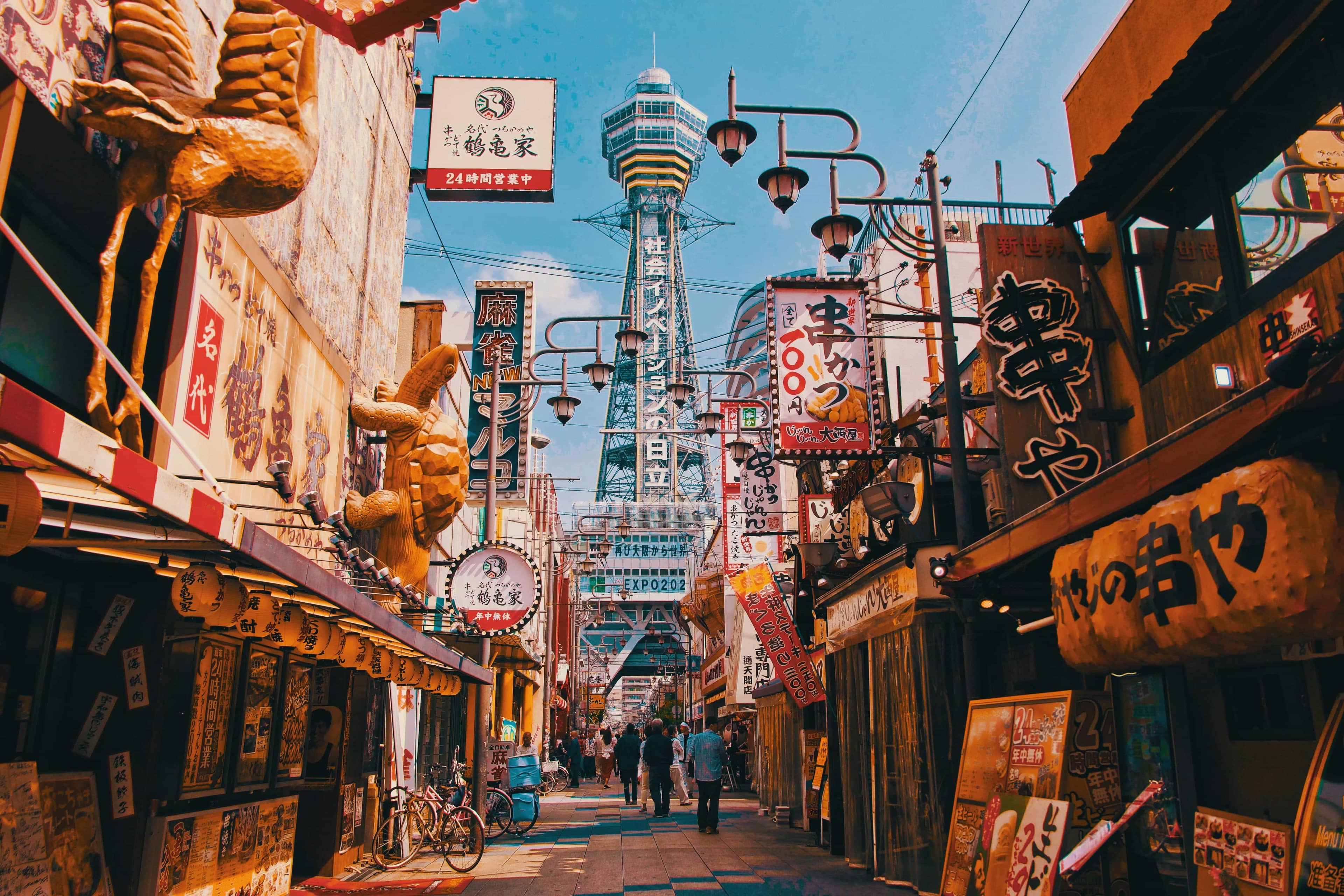
Osaka's food culture rewards those who leave the Dotonbori tourist strip. The famous street - neon signs, the Glico running man billboard, takoyaki stalls and crab restaurants - is worth seeing once for the spectacle. The actual eating is better in the backstreets of Namba, the covered Shinsaibashi-Suji shotengai (shopping arcade), and the extraordinary working-class neighbourhood of Shinsekai.
Shinsekai is old Osaka - a working-class neighbourhood built to imitate Paris and New York in 1912 that has retained its original character. The kushikatsu restaurants here serve Osaka's most distinctive food: everything imaginable (pork, chicken, vegetables, lotus root, quail eggs) skewered, breaded, and deep-fried in a shared vat of oil, dipped once in sauce (the strict rule: no double-dipping). Price per skewer: £0.50–1.
Osaka Food Essentials
- Takoyaki: Octopus balls in a dashi batter with mayonnaise, okonomiyaki sauce, and bonito flakes - Aizuya in Namba or any stall on Dotonbori. The Osaka original.
- Okonomiyaki: Savoury pancake with cabbage, pork, and various additions - Mizuno in Dotonbori has been serving them since 1945.
- Kushikatsu in Shinsekai: Daruma in Shinsekai for the classic version - extraordinary value, extraordinary experience.
- Kuromon Ichiba Market: Osaka's kitchen - the covered market with fresh seafood, produce, and prepared food that supplies the city's restaurants. Excellent for breakfast snacking.
Day Trips from Osaka
Kyoto (30–40 minutes by local train) is the obvious day trip - the temples, the geisha district, the Nishiki Market. Staying in Osaka and day-tripping to Kyoto saves significant money on accommodation.
Nara (45 minutes) has the free-roaming deer in Nara Park, the great Buddha at Todai-ji, and an extraordinary collection of early Japanese architecture - easily done in half a day.
Kobe (30 minutes by Hankyu train) is worth a half-day for the Kitano neighbourhood of foreign traders' houses, the extraordinary Kobe beef culture (a £10 lunch at a local teppanyaki restaurant is transformative), and the city's character as Japan's most international port.
Also Consider
Pairs well with, or alternatives worth comparing:
Wondering how much you actually save in shoulder season? Our Shoulder Season Price Report analyses hotel prices across 110 destinations - flights are 37% cheaper, hotels drop 20–50%, and September is the world's most valuable travel month.
Frequently Asked Questions About Osaka
- When is the best time to visit Osaka? April for cherry blossoms at Osaka Castle (less crowded than Kyoto) and October–November for autumn foliage. Both windows have comfortable temperatures and hotel prices below the spring peak. Osaka's indoor food culture makes it enjoyable year-round, but summer (July–August) is brutally hot and humid.
- Is Osaka cheaper than Tokyo? Generally yes - accommodation and dining both run 15–25% cheaper than equivalent Tokyo options. Osaka's izakaya culture (informal pub dining) makes excellent eating very affordable. The city rewards those who eat like locals.
- How do I get between Osaka and Kyoto? The Hankyu or Keihan local trains (30–40 minutes, under £3) are the best value. The JR Shinkansen between Osaka Station and Kyoto takes 15 minutes but costs much more. Osaka and Kyoto make natural bases for each other - many visitors stay in Osaka (cheaper hotels) and day-trip to Kyoto.
- What is Osaka's food scene like? Extraordinary - Osaka has a specific culinary identity built around takoyaki (octopus balls), okonomiyaki (savoury pancakes), kushikatsu (skewered deep-fried everything), and ramen. The phrase 'kuidaore' (eat until you drop) describes the city's relationship with food. Dotonbori is the tourist-facing centre; the backstreets of Namba and the Shinsaibashi shotengai cover the same dishes at lower prices.
- Is Osaka safe? Extremely safe - one of Japan's safest cities. The main practical concern for visitors is the complexity of navigating a large city in an unfamiliar writing system, which apps and Google Maps handle well. Namba and Dotonbori are lively late at night but safe.
Comparing your options? Read our detailed Kyoto vs Osaka comparison - shoulder season timing, price differences, and an honest verdict on which to visit.
Ready to Book?
May is one of the best times to visit Osaka. Compare prices now:
We may earn a small commission on hotel bookings at no extra cost to you.
This destination is great for:
Osaka vs Kyoto: which should you visit?
Side-by-side comparison - timing, cost, and an honest verdict.
If You Like Osaka, Also Consider…
Also see: Best time to visit Japan →
Osaka is featured in: