
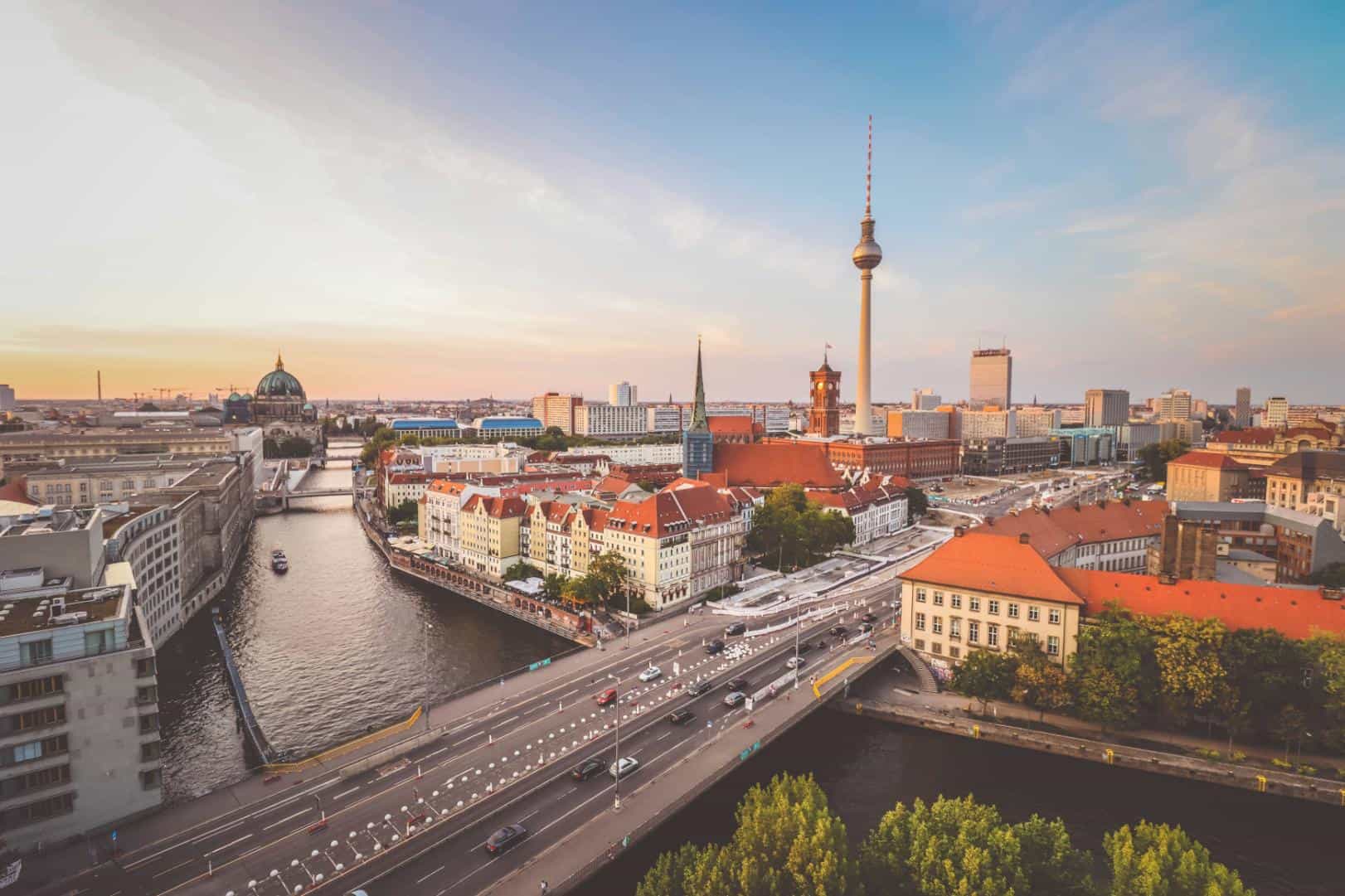
Crowd preference
How many other tourists is too many?
Best months for atmosphere without overwhelming crowds
Berlin — meaningfully fewer visitors than peak, but the destination is fully open and operating normally. Good balance of atmosphere and accessibility.
Best Time to Visit Berlin 2026: Germany's Capital Season by Season
Berlin is Europe's most consistently interesting capital - a city that has reinvented itself more dramatically than anywhere else on the continent, where the Berlin Wall Memorial and the Holocaust Memorial sit alongside Museum Island's extraordinary collections and a nightlife and contemporary art scene that has shaped global culture for three decades. It's also a city that changes character dramatically with the seasons - the beer gardens and canal-side culture of summer give way to the extraordinary Christmas markets of December, and both are worth experiencing if you're choosing when to visit.
May and September are Berlin's shoulder season sweet spots - warm enough for the outdoor culture that defines Berlin summers, with hotel rates below the July–August peak when the city fills with festival visitors. The city's parks (the Tiergarten, Tempelhof, the Volkspark Friedrichshain) are at their most beautiful in May with blooming gardens and in September with fall foliage beginning.
Berlin in May: The City Wakes Up
May is when Berlin shakes off its long winter and the beer gardens open. The city begins its transformation from the cold, indoor-focused months into the outdoor, spontaneous culture that makes it extraordinary in summer - but in May, before the high season brings higher prices and more tourists. The Tiergarten's cherry alleys and blooming gardens are beautiful in early May; the park's beer garden (the Café am Neuen See) reopens and fills with Berliners on the first warm weekends.
Berlin's public holiday calendar gives May a specific energy - Labour Day (May 1st) has street festivals in Kreuzberg and Neukölln, and Ascension/Whitsun weekends often fall in May–June, creating long weekends that fill the city with open-air events. The temperatures in May (14–20°C) are ideal for the city's extraordinary walking culture - the 5km east-west traverse from the East Side Gallery to the Brandenburg Gate covers most of Berlin's major historical sites.
May Berlin Highlights
- Beer gardens opening: The Tiergarten's Café am Neuen See, the Prater Garten in Prenzlauer Berg (Berlin's oldest beer garden), and the rooftop bars of Mitte - all reopening after winter.
- Berlin Gallery Weekend (late April/early May): Over 50 galleries opening simultaneously for one weekend - the city's concentrated contemporary art opening, free entry throughout.
- Karneval der Kulturen (Whitsun weekend): The multicultural carnival parade through Kreuzberg - one of Berlin's great free annual spectacles.
- Museum Island in spring: The Pergamon, Neues Museum, and Alte Nationalgalerie before summer tour group season - the best time to experience Museum Island without crowds.
Berlin in Summer: June–August
Berlin summer is long and warm - temperatures of 22–28°C in July, the longest daylight hours in Northern Europe (light until 9:30pm in June), and the entire city oriented toward outdoor life. The open-air events calendar is extraordinary: the Classic Open Air at the Gendarmenmarkt, the Lollapalooza festival in the Olympiapark, the long-running Tempelhofer Feld culture on the former airport runway (now a vast public park where Berliners barbecue, cycle, and fly kites on 386 hectares of open space).
The high season of July and August brings higher hotel rates and more international visitors, but the city expands to absorb them. The canal paths of Kreuzberg and Neukölln, the Schlachtensee swimming lake, and the extraordinary Strandbad Wannsee (Berlin's urban beach lido, opened 1907) give summer a specific Berlin character unlike any other European capital.
Berlin in September & October: Art Week & Fall Foliage
Early October is Berlin's finest autumn month - the fall foliage of the Tiergarten and the city's parks is extraordinary, temperatures remain warm enough (14–20°C) for outdoor culture, and the summer tourist peak has passed. Hotel rates drop noticeably from August.
The Berlin Art Week in September is the most important week in the city's cultural calendar - gallery openings across the city, the abc art fair, special museum exhibitions, and the concentrated energy of Berlin's extraordinary contemporary art world at its most publicly visible. If contemporary art interests you, this is the best week to visit Berlin.
The first week of October has the Festival of Lights - Berlin's iconic landmarks and buildings illuminated with light art projections for 10 days. The Brandenburg Gate, the Berlin Cathedral, Charlottenburg Palace, and the TV Tower (Fernsehturm) all become canvases for extraordinary light installations. Free, city-wide, and one of Berlin's most spectacular annual events.
Berlin Christmas Markets & Winter
Berlin's Christmas markets run from late November through December 24th - over 80 markets across the city, each with its own character. The Charlottenburg Palace market has the most spectacular backdrop - the illuminated Baroque palace behind the stalls, Glühwein, and carved wooden decorations in the palace forecourt. The Gendarmenmarkt market (ticketed entry, worth it) is the most atmospheric - flanked by the French and German cathedrals, with mulled wine and seasonal treats in an extraordinary architectural setting.
Late November is the sweet spot - markets newly opened, festive lights going up on the Kurfürstendamm, and the city hasn't yet reached the mid-December peak. New Year's Eve at the Brandenburg Gate draws over a million people for the street parties and fireworks - one of Europe's great New Year's Eve celebrations and entirely free.
Berlin's Historical Sites
Museum Island - five world-class museums on an island in the Spree, UNESCO-listed. The Pergamon Museum (under renovation until 2025, check status) has the Pergamon Altar and the Ishtar Gate of Babylon; the Neues Museum has the Nefertiti bust; the Alte Nationalgalerie has 19th-century German art; the Altes Museum has Greek and Roman antiquities. The combined day ticket is the best cultural value in Germany.
The Berlin Wall Memorial (Bernauer Strasse) - the most comprehensive and moving documentation of the Wall's history, with a preserved section of the death strip and the stories of those who attempted to cross. Free, open air, and essential. The East Side Gallery (1.3km of Wall painted by international artists in 1990) is further east - more famous but less historically contextualised.
The Brandenburg Gate - the neoclassical gate that was the division point between East and West Berlin, now the city's symbolic centre. Most impressive at dawn or dusk when the golden light catches the Quadriga sculpture; the Tiergarten park immediately west gives the most beautiful approach.
Eating in Berlin
Berlin Food Essentials
- Currywurst: Sliced pork sausage with curry ketchup - Berlin's street food invention since 1949. Curry 36 in Kreuzberg and Konnopke's Imbiß in Prenzlauer Berg are the benchmarks.
- Döner kebab: Berlin invented the modern döner - Mustafa's Gemüse Kebap in Kreuzberg (queue expected) is the most famous. The city's Turkish community has made Berlin a serious döner destination.
- Breakfast culture: Berlin's weekend brunch scene is extraordinary - Café Morgenstern in Neukölln, Roamers in Neukölln, and the canal-side cafés of Kreuzberg are all excellent.
- Beer gardens (May–September): Prater Garten in Prenzlauer Berg (Berlin's oldest, 1837) for Pils under chestnut trees.
- Markthalle Neun (Kreuzberg, Thursday evening): The Thursday Street Food market in the historic market hall - the best weekly food market in Berlin, genuinely diverse and excellent quality.
Also Consider
Pairs well with, or alternatives worth comparing:
Wondering how much you actually save in shoulder season? Our Shoulder Season Price Report analyses hotel prices across 110 destinations - flights are 37% cheaper, hotels drop 20–50%, and September is the world's most valuable travel month.
Frequently Asked Questions About Berlin
- When is the best time to visit Berlin? May and September are the shoulder season sweet spots - warm enough for beer gardens and the city's extraordinary park culture, with hotel rates below the July–August peak. September has the Berlin Art Week and fall foliage beginning in the Tiergarten; May has the blooming gardens and the city emerging from winter with visible energy.
- What are Berlin's Christmas markets like? Berlin has over 80 Christmas markets running from late November through December 24th - the most famous at Charlottenburg Palace and the Gendarmenmarkt (ticketed, the most atmospheric). The mulled wine (Glühwein), seasonal treats, and festive lights against Berlin's extraordinary architecture make it one of Europe's finest Christmas market cities.
- Is Berlin good to visit in winter? Yes - Berlin's low season (November–February) has the cheapest hotel rates of the year and a city that belongs to Berliners. The world-class museum collections on Museum Island are at their least crowded. January and February are cold (0–5°C) but the Christmas market season and New Year's Eve celebrations at the Brandenburg Gate make November–January worth considering.
- What is the Berlin Art Week? Berlin Art Week (September) is one of the world's most important contemporary art events - gallery openings, art fairs (including the prestigious abc art berlin contemporary), museum special exhibitions, and the entire city's art world active simultaneously. The best week to visit for culture.
- How do I get around Berlin? Berlin's public transport (U-Bahn, S-Bahn, trams, and buses) is extensive and excellent - the AB zone day ticket covers virtually everything tourists need. The city is also extraordinarily flat and cycling-friendly; the extensive bike lane network makes renting a bike one of the best ways to explore the parks, canal paths, and neighbourhoods between major sights.
Ready to Book?
May is one of the best times to visit Berlin. Compare prices now:
We may earn a small commission on hotel bookings at no extra cost to you.
This destination is great for:
Berlin is featured in: