
Crowd preference
How many other tourists is too many?
Best months for atmosphere without overwhelming crowds
Zurich — meaningfully fewer visitors than peak, but the destination is fully open and operating normally. Good balance of atmosphere and accessibility.
Best Time to Visit Zurich 2026: Month-by-Month Guide
Zurich experiences a temperate climate with four distinct seasons - and each one creates a genuinely different city. Average temperatures range from 4°C in winter to 25°C in summer, meaning the city you visit in January is almost unrecognisable from the one in July. The shoulder months of April–May and September–October offer the best balance: fewer tourists and fewer crowds than the summer peak, hotel prices 20–30% lower, and weather that suits outdoor exploration - but the timing decision matters more here than in most European cities, because the price difference between peak and shoulder is substantial (up to 35%) and the Street Parade in August creates one of the continent's most extreme hotel price spikes. The sweet spots are April–May for spring culture and lake swimming beginning, and September for the Film Festival, warm lake water, and crisp alpine air. Budget travellers should look at November or January, when the city is at its cheapest and least crowded.
This guide covers every month, all four seasons, the best activities by time of year, and the events worth timing a visit around - with honest price data throughout.
Best time to visit Zurich: quick answer
- Best overall months: September (warm lake, Film Festival, 20% below peak) and May (spring, lake swimming starts, Rhine Falls at max flow)
- Best for festivals: April (Sechseläuten, 3rd Monday) and late September (Film Festival)
- Cheapest months: January–February (€130–135/night) and November (€140/night)
- Avoid: Street Parade weekend in August (hotel prices double, accommodation scarce)
- Best for skiing day trips: December–March (Engelberg, Arosa, Davos all within 2.5 hours)
- Lake swimming season: Late May through September (peaks at 22°C in late June)
Zurich by season
Spring (March–May)
Zurich's most underrated season for budget travelers. Spring brings affordable prices - hotel rates 25% below summer peak - alongside blooming parks, cherry blossoms in the English Garden, and the city's most distinctive traditional spring festival. April's Sechseläuten (the traditional festival where the Böögg snowman effigy is burned to predict summer weather) is one of Switzerland's most extraordinary events. May adds lake swimming, the Botanical Garden at peak colour, and long warm evenings. Nature lovers and those wanting Zurich without summer crowds will find spring ideal.
Summer (June–August)
Zurich summers bring warm weather and a social city at full energy - lake swimming, outdoor cinema at Zürichhorn, long sunny days on the Limmat. Average highs reach 25°C in July, with many sunny days June through August. June is the sweet spot before summer crowds arrive. The summer months of July and August bring the highest prices and the busiest streets - the Street Parade in August is one of Europe's largest techno street parties, attracting over a million visitors for one weekend. Summer is also Zurich's wettest season - afternoon thunderstorms are common.
Autumn (September–October)
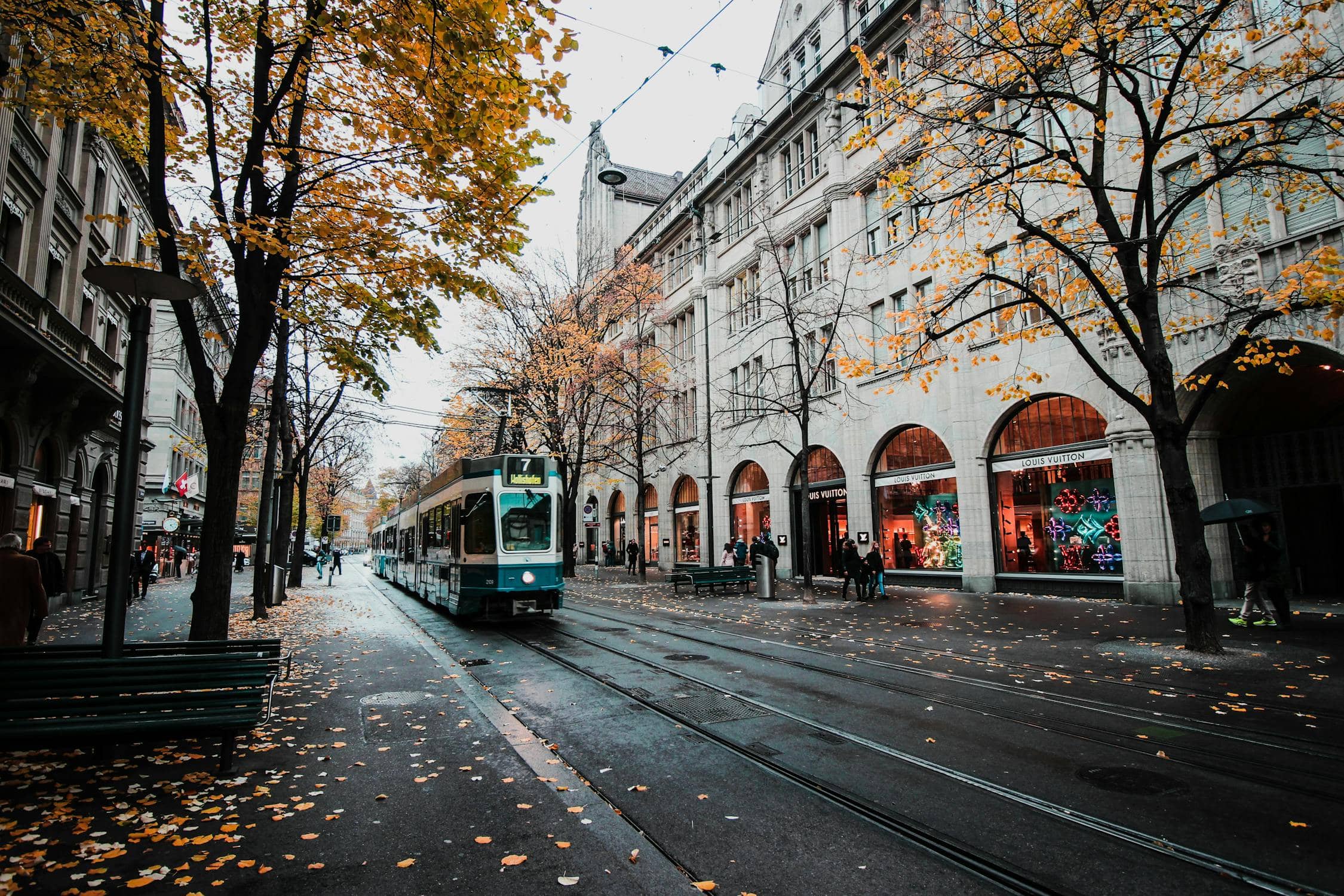
September is arguably Zurich's finest month - the lake stays warm (20–22°C), the Film Festival brings cultural energy, alpine air is crisp and clear, and hotel prices sit 20–25% below August. October adds Jazznojazz, autumn foliage on Uetliberg, and the opening of fondue season. Both months reward visitors with the city at full capability but without summer crowds or prices.
Winter (November–February)
November and January–February are Zurich's cheapest months at €130–140/night for mid-range hotels. The trade-off is cold (2–6°C), short days, and November's famous Nebelmeer - fog that fills the lowlands while the Uetliberg rises above it into sunshine. December's Christmas markets make it worth the premium: the Hauptbahnhof indoor market is Europe's largest, and Sechseläutenplatz hosts a skating rink and outdoor stalls.
Is Zurich Worth Visiting?
Yes, for 2–3 days - but Zurich is a base more than a bucket-list city. It offers a scenic Old Town, a beautiful lake you can swim in, world-class museums, and unmatched Alpine day-trip access: Lucerne is 45 minutes, Rhine Falls 30 minutes, Interlaken 2 hours.
Worth it if: you want a low-stress, English-friendly Switzerland entry with great food and easy day trips. Consider skipping if: you only have 3 days total - Lucerne delivers more iconic scenery per day.
Cheapest Time to Visit Zurich
November and January–March are cheapest. Mid-range 4-star hotels drop from CHF 400–500/night in July to CHF 220–300/night in February - a 30–40% saving. Flights from the UK and North America are also at annual lows (excluding the December 20–January 5 holiday spike).
Trade-offs: cold (0–5°C average highs), short daylight. For value with good weather: April–May and September–October at CHF 280–380/night.
How Many Days Do You Need in Zurich?
Two full days is the sweet spot. Day 1: Old Town walk (Bahnhofstrasse, Grossmünster, Lindenhof viewpoint), Lake Zurich boat cruise, dinner in Niederdorf. Day 2: major museum (Kunsthaus or Swiss National Museum), Uetliberg mountain for Alpine panorama (CHF 18 return by S10 train), lake swimming in summer.
Day 3 (optional day trip): Rhine Falls (30 min, Europe's largest waterfall), Lucerne (45 min), or Stein am Rhein (1 hour). The Zurich Card (CHF 29/24h, CHF 56/72h) covers all transport + most museums.
Is Zurich Expensive?
Yes - consistently one of the world's three most expensive cities. Budget minimum: USD 160/day (hostel, supermarket meals, walking). Mid-range: USD 350–550/day (3-star hotel, restaurant meals, museum entries).
Key prices: Migros lunch CHF 18–25; restaurant meal CHF 28; beer CHF 8–10; tram ticket CHF 4.60; 4-star hotel CHF 350–500/night in summer. Save with: Co-op/Migros in-store hot meals (CHF 12–18), free lake swimming, and the free 'Züri rollt' bike rental scheme.
What is There to Do for Free in Zurich?
More than you'd expect. Always free: Old Town walking (Niederdorf, Lindenhof, Augustinergasse), Lake Zurich promenades (Bürkliplatz to Zürichhorn, 4 km), Grossmünster church, and the Modissa department-store rooftop for free city views.
Free in summer: Limmat River swimming at Oberer Letten and Unterer Letten. Free in winter: Christmas-market wandering and the Märlitram fairy-tale tram for kids. A full Zurich day is doable for under CHF 30 in food and transport.
Is Zurich or Geneva Better?
Zurich for first-time visitors and a fuller city experience; Geneva for Lake Geneva access and French-speaking Switzerland. Zurich has a more lively Old Town, stronger museums (Kunsthaus significantly outperforms Geneva's options), a livelier bar scene, and better Alpine day trips.
Costs: roughly equal - Geneva slightly cheaper for tourists. Pick Geneva if: combining with Chamonix or the Lake Geneva towns (Lausanne, Montreux, Vevey).
Is July a Good Time to Visit Zurich?
Yes - July is one of the best months weather-wise, but also the most expensive. Highs of 24–26°C, 8+ hours of sun, lake water at 20–22°C, and daylight until 9:30 PM. Excellent for lake culture and outdoor dining.
Key warning: The August Street Parade (second Saturday of August, 1M+ attendees) sells out hotels city-wide months ahead. For better value with similar weather: late June or early September, 15–25% cheaper.
Cheapest Time to Visit Switzerland
Switzerland has two opposite price cycles. Cities (Zurich, Geneva, Bern, Lucerne) are cheapest in winter (November–March) when tourists shift to ski resorts - rates drop 30–40%. Ski resorts (Zermatt, St. Moritz, Verbier) are cheapest in summer (June–October).
Best overall value: Late May and early October - mild weather, shoulder pricing in both cities and mountain areas, with alpine flowers or foliage depending on elevation.
Month-by-month planner
| Month | High | Low | Rain | Crowds | Hotel/night | Notes |
|---|---|---|---|---|---|---|
| Jan | 4°C | -1°C | 60mm | Low | €130 | Cheapest month. Cold, short days. Museums uncrowded. |
| Feb | 6°C | 0°C | 55mm | Low | €135 | Low season. Fasnacht carnival (colourful parades). Cold but sunny spells. |
| Mar | 11°C | 3°C | 70mm | Low–Med | €155 | Spring beginning. Sechseläuten late month (3rd Monday Apr). |
| Apr | 14°C | 5°C | 75mm | Med | €165 | ✅ Shoulder - Sechseläuten festival, spring gardens, pleasant. |
| May | 18°C | 9°C | 100mm | Med | €175 | ✅ Shoulder - lake swimming begins, Rhine Falls at peak flow. |
| Jun | 22°C | 13°C | 115mm | Med–High | €195 | ✅ Early shoulder - warm, lake 20°C+, early June is sweet spot before summer crowds. |
| Jul | 25°C | 15°C | 115mm | Peak | €230 | Peak. Züri Fäscht (every 4 years). Wettest month despite warmth. |
| Aug | 24°C | 15°C | 115mm | Peak | €235 | ⚠️ Street Parade (1M+ attendees). Expensive. Wettest season. |
| Sep | 20°C | 12°C | 75mm | Med | €180 | ✅ Shoulder - Film Festival, lake still 20°C, alpine air, best value. |
| Oct | 14°C | 7°C | 70mm | Low–Med | €160 | ✅ Shoulder - Jazznojazz, foliage, fondue opening. Early October still warm. |
| Nov | 8°C | 2°C | 70mm | Low | €140 | Nebelmeer fog season. Budget-friendly. Christmas market late month. |
| Dec | 4°C | 0°C | 65mm | Med | €165 | Christmas markets. Hauptbahnhof indoor market (Europe's largest). Prices rise. |
Mid-range hotel rates are approximate. Summer is Zurich's wettest season despite the warmth - afternoon thunderstorms are common June–August.
Best time for outdoor activities & sightseeing
Lake swimming (badis)
Late May – September18 public lidos on the lake and Limmat. Strandbad Tiefenbrunnen (best facilities), Frauenbad Stadthausquai (historic wooden badi, women-only in mornings), Seebad Enge (pontoon platforms). Entry CHF 8–10. Lake reaches 22°C by late June. Locals swim before work - often as early as 6am. A defining Zurich experience.
Hiking & Uetliberg
April – OctoberUetliberg mountain (871m) is Zurich's own mountain, 20 minutes from the centre by S-Bahn to the summit. For nature lovers, the hiking trails here are among the best accessible alpine routes in Europe - the Planet Trail walk (2.5 hours) descends through forest back to the lake, with vantage points over the city, lake, and Swiss Alps. Cable cars serve higher Swiss resorts for more serious hiking. September is the best month for hiking in Zurich as the weather is still mild and the fall foliage adds beauty to the trails. September mornings offer the best visibility - clear alpine air with the full arc of Swiss Alps visible on good days. The Albis Ridge continues to Stallikon for half-day walks.
Cycling & river floating
May – SeptemberZurich's flat lakeside and riverside paths are excellent for cycling - hire bikes from Züri rollt (free, deposit required) at key city locations. River floating on the Limmat river is a local tradition: enter at Oberer Letten, float downstream to Unterer Letten. The city's parks - Zürichhorn, Rieterpark, and the Chinese Garden on the lake - are all free and excellent for warm-weather afternoons. Best June–August when water temperature is 18–22°C. Paddleboarding and kayak hire available on Lake Zurich from May.
Swiss Alps day trips (non-ski)
May – OctoberGrindelwald: 2 hours by train, views of the Eiger north face, summer hiking from Männlichen or First. Jungfraujoch (3,454m, 'Top of Europe'): dramatic year-round but book weeks ahead. Lucerne + Pilatus or Rigi: 2-hour circuit, lake cruise combined with cog railway. Best in May–June (snowmelt waterfalls) and September–October (autumn colour, clear air).
Skiing (day trips)
December – MarchZurich is the gateway to Swiss ski resorts for winter sports enthusiasts. Flumserberg: 1 hour, good beginner terrain. Engelberg: 1.5 hours, excellent intermediate-advanced skiing. Arosa: 2 hours, quiet and charming with cable cars to high alpine terrain. Davos/Klosters: 2.5 hours, Switzerland's largest ski area. Note: December has the highest prices of the year as Christmas markets and ski season overlap. January (after New Year) is the best value ski month - lower than Christmas peak, fresh snow still reliable.
Old Town & museums
Year-round, best Apr–May & SepThe Altstadt rewards slow exploration - Grossmünster (Romanesque twin towers), Fraumünster (Chagall stained glass windows), Lindenhügel viewpoint, and Niederdorf's independent shops. Kunsthaus Zurich (Switzerland's largest art museum): CHF 26 entry, free first Sunday of the month. Museum Rietberg (Asian and African art in lakeside villa): excellent and uncrowded. Landesmuseum (Swiss history): free entry.
Lake Zurich: when to swim, cruise, and explore
Lake Zurich is the city's beating heart in warm months. The ZSG lake boat service runs year-round (reduced winter schedule) - a round trip to Rapperswil (1.5 hours each way) is a worthwhile half-day in May through October. The covered boat from Bürkliplatz departs hourly. Swiss Travel Pass covers lake boats.
Key events 2026
Best time to visit Zurich for budget travellers
Zurich is expensive - but the gap between peak and budget-season is one of the widest of any European city. Here's how to maximise value:
Budget Zurich: the key moves
- Travel in January–February or November: Hotel rates at €130–140/night vs €230–250 in August. Same city, same attractions, 40–45% less.
- Book midweek: Zurich has a large business travel market - weekend rates are sometimes lower than weekday rates, the reverse of most leisure cities.
- Zürich Card: 24-hour CHF 29 or 72-hour CHF 59, covering all public transport plus free or discounted museum entry. Essential for any stay of 2+ days.
- Free Kunsthaus day: Switzerland's largest art museum is free on the first Sunday of each month - plan your visit accordingly.
- Badi swimming: The lake badis are one of Europe's greatest value experiences at CHF 8–10 entry - locals pay this and swim daily May–September.
- Migros and Coop supermarkets: Both chains have excellent prepared food counters (sushi, salads, sandwiches) for lunch under CHF 10 - significantly cheaper than restaurants.
Practical tips: packing, transport, booking
Packing by season
- Spring (Apr–May): Light layers essential - mornings are cool (8–12°C), afternoons warm up to 18°C. A packable waterproof for April showers. Comfortable walking shoes for cobbled Altstadt.
- Summer (Jun–Aug): Lightweight clothing plus a layer for evenings and air-conditioned spaces. Sunscreen essential - altitude and lake reflection amplify UV. Swimwear for the badis.
- Autumn (Sep–Oct): Medium-weight jacket, layers. September still warm enough for T-shirt afternoons; October needs a proper coat by end of month.
- Winter (Nov–Mar): Full winter kit - insulated coat, scarf, gloves, waterproof boots. Temperatures regularly drop below freezing. Snow in the city is occasional but possible Jan–Feb.
Airport transfer
Zurich Airport (ZRH) to city centre: 10 minutes by direct train, every 10 minutes, CHF 6.80. One of Europe's most efficient airport rail links.
Booking ahead
Street Parade (August): book 3–6 months ahead or avoid. Zurich Film Festival (late Sep): 4–6 weeks. Sechseläuten (3rd Mon April): 2–4 weeks. Other times: 2–3 weeks is fine.
Swiss National Day
August 1st is Swiss National Day - fireworks over the lake at 10pm. Hotels book up but the evening atmosphere is worth it if you're already there.
Zürich Card vs Swiss Travel Pass
Zürich Card for city-only stays. Swiss Travel Pass if combining with Lucerne, Bern, the alps, or Graubünden - covers all trains and many mountain railways with unlimited travel on most routes.
Main train station (Hauptbahnhof)
Zurich's main station is Europe's busiest rail hub and worth exploring in its own right - the underground food court, the Zurich West district entrance nearby, and in December, Europe's largest indoor Christmas market with food stalls and the famous fairy tale tram (Märlitram) departing from outside.
Traditional Swiss food & chocolate
Beyond cheese fondue, try Zürcher Geschnetzeltes (veal in cream sauce with rösti), at Zeughauskeller or Kronenhalle. Swiss chocolate from Sprüngli on Bahnhofstrasse - their Luxemburgerli are Zurich's signature treat. Cobblestone streets of Niederdorf have the best casual Swiss restaurants.
Swiss National Museum & Zurich West
The Swiss National Museum (next to HB, free entry) covers Swiss history with an excellent permanent collection - ideal for a rainy day. Zurich West neighbourhood has the city's best contemporary restaurants, street art, and the Theater Spektakel festival venue.
Sample itineraries by season
3 days in Zurich: September shoulder season
Day 1 - Arrive, check in Altstadt hotel. Evening walk: Grossmünster, Niederdorf, dinner at Zeughauskeller (historic armoury restaurant). Lake swim at Seebad Enge before sunset.
Day 2 - Morning: Kunsthaus Zurich (2–3 hours). Lunch at Migros counter. Afternoon: Uetliberg S-Bahn, summit views of Alps, Planet Trail walk down (2.5 hours). Film Festival screening in the evening if dates align.
Day 3 - Day trip: Lucerne by train (45 min). Chapel Bridge, Lion Monument, lake cruise. Return to Zurich for dinner in Langstrasse neighbourhood.
3 days in Zurich: December Christmas markets
Day 1 - Arrive. Hauptbahnhof Christmas market (Europe's largest indoor market - atmospheric with 100+ stalls and a giant Christmas tree). Mulled wine on Sechseläutenplatz ice rink terrace.
Day 2 - Kunsthaus Zurich morning. Afternoon: Bahnhofstrasse and Fraumünster (Chagall windows). Evening: Fondue at Raclette Factory or Zeughauskeller - peak season for both.
Day 3 - Day trip: Rhine Falls in winter (dramatic, far fewer visitors). Or stay in city for Museum Rietberg (lakeside villa museum, Asian/African art) and final Bahnhofstrasse walk.
3 days in Zurich: May hiking & outdoor
Day 1 - Arrive. Late afternoon lake swim if warm enough (late May). Explore Langstrasse neighbourhood for dinner - Zurich's most local-feeling area.
Day 2 - Day trip to Rhine Falls (30 min train) - snowmelt at maximum, waterfall at full volume. Return via Schaffhausen old town. Lake boat cruise in the evening.
Day 3 - Uetliberg hike + Albis Ridge extension (4–5 hours). Badi swim on return. Sprüngli café for Luxemburgerli (Zurich's signature petit fours) as a final treat.
Also consider
Similar European city breaks worth comparing:
How much do you actually save in shoulder season? Our Shoulder Season Price Report analyses hotel prices across 110+ destinations - flights are 37% cheaper, hotels drop 20–50%, and September is the world's most valuable travel month.
Frequently asked questions about visiting Zurich
When is the best time to visit Zurich?
April–May and September are Zurich's finest shoulder season months. April has Sechseläuten (the spring festival where guild members burn a giant snowman), May has warm weather and lake swimming beginning at the badis, and September has the Zurich Film Festival, crisp alpine air, and hotel prices 20–25% below the August peak. All three months have comfortable temperatures (14–22°C), meaningfully fewer tourists than July–August, and the city fully operational.
Is Zurich expensive to visit?
Zurich is consistently one of Europe's most expensive cities, but shoulder season reduces the cost meaningfully. Hotels average €165–180/night in shoulder season versus €230–250 in July–August peak - a saving of 25–30%. Flights from London and other European hubs run 25–35% cheaper in shoulder season. Many of Zurich's finest experiences are free: the lake badis (CHF 8–10 entry), Uetliberg mountain (S-Bahn only), the old town, and the Kunsthaus permanent collection on the first Sunday of each month. Budget travellers should target November–March (excluding Christmas markets in December) for the lowest hotel rates.
What is Sechseläuten?
Sechseläuten is Zurich's spring festival, held on the third Monday of April. Guild members parade through the city in historical costumes and on horseback, followed by the burning of the Böögg - a snowman figure stuffed with fireworks - on Sechseläutenplatz at 6pm. The time it takes the Böögg's head to explode is said to predict the summer weather (faster explosion = better summer). It's free to watch and one of Switzerland's most distinctive festivals - a genuine reason to be in Zurich in April.
Can you swim in Lake Zurich?
Yes - lake swimming is one of Zurich's defining experiences, running May through September. The city has 18 public lidos (Badis) on the lake and Limmat river, open from late May. Strandbad Tiefenbrunnen has the best facilities; Frauenbad Stadthausquai is a historic wooden badi with a sauna; Seebad Enge has a pontoon platform. Entry is CHF 8–10. The lake reaches 22°C by late June and stays warm through September. Locals swim before work, at lunch, and after dinner - it's a genuine city ritual rather than a tourist activity.
What is the Zurich Film Festival?
The Zurich Film Festival runs for 12 days in late September/early October, screening 150+ international films with directors and actors in attendance. It's one of Europe's significant film festivals - smaller than Cannes or Venice but with genuine industry presence and accessible public screenings at Zurich's historic cinemas. Visiting in late September means the city is at its most culturally animated, with warm autumn weather and hotel prices well below the August peak.
What are the best day trips from Zurich?
Zurich is one of Europe's finest day-trip bases thanks to Switzerland's rail network. Lucerne is 45 minutes away - the wooden Chapel Bridge, Lion Monument, and lake views are unmissable. Rhine Falls (Neuhausen) is Europe's largest waterfall by volume, just 30 minutes by train; visit in May–June when snowmelt maximises the volume. Appenzell (90 minutes) is traditional Switzerland at its most intact - excellent cheese, rolling hills, and costumed Landsgemeinde in April. The Bernese Oberland (Grindelwald, Jungfrau) is 2 hours and among the world's great alpine landscapes - book the Jungfraujoch cogwheel train well ahead.
When is Zurich cheapest?
January and February are Zurich's cheapest months - hotel prices average €130–135/night, flights from Europe are at annual lows, and the city is fully operational for museum visits and indoor culture. November is also excellent value at €140/night. The shoulder months of April–May and September–October offer the best balance of value and good weather at €160–180/night. Avoid July–August (peak prices, Street Parade weekend spikes) and December (Christmas markets push rates back up).
What is Züri Fäscht and when does it happen?
Züri Fäscht is Zurich's enormous city festival, held every four years over three days in early July. It's one of Switzerland's largest public events, with fireworks over the lake, free concerts, and over two million visitors. The next edition after 2023 will be in 2027. When it does occur, hotel prices and accommodation availability are severely impacted - book many months ahead or plan around it.
Ready to Book?
May is one of the best times to visit Zurich. Compare prices now:
We may earn a small commission on hotel bookings at no extra cost to you.
This destination is great for:
Zurich is featured in: