
Crowd preference
How many other tourists is too many?
Best months for atmosphere without overwhelming crowds
Bali — meaningfully fewer visitors than peak, but the destination is fully open and operating normally. Good balance of atmosphere and accessibility.
Is Bali Good in February?
February is Bali's peak rainy month — but it's not a dealbreaker. Rain typically falls in afternoon bursts (2–3 hours) rather than all day, leaving mornings clear for temples, rice terraces, and Ubud markets.
The upside: Bali is at its cheapest (villas 40–60% off July–August peak), the rice paddies and jungle are vividly green, and tourist numbers are at their lowest. February is ideal for Ubud, wellness retreats, and anyone prioritising budget.
When is the Rainy Season in Bali?
Bali's rainy season runs October–March, peaking December–February. The pattern: short, heavy afternoon downpours (usually 2–4pm) that clear quickly. Mornings are typically sunny. The west coast gets more consistent rain than the south.
Dry season (April–September) offers reliable weather, with May and September the shoulder sweet spots: dry conditions with prices 25–40% below July–August peak.
Is November a Good Time to Visit Bali?
November is underrated. Prices are 35–50% below peak, the landscape is beautifully lush from early rains, Ubud is peaceful, and hotels are easy to book. Mornings are usually fine; afternoon showers become increasingly frequent through the month.
Bottom line: If you want dry certainty, choose May. If you want Bali at its cheapest with decent weather, November is excellent value.
Cheapest Time to Visit Bali
January–February are the absolute cheapest months (excluding the Christmas/New Year spike). Villa prices drop 40–60% below July–August; flights from Europe can be 30% lower. Trade-off: rainy season.
For value with good weather: May and September are the sweet spots — 25–40% below peak, dry conditions, manageable crowds.
Is May a Good Month for Bali?
Yes — May is arguably Bali's best month. The dry season has arrived, the landscape is still lush green from the rains, crowds are significantly below the July–August peak, and prices are 25–35% lower.
Sea temperatures are 28°C, waves are good for surfing, Ubud is calm and accessible. May sits in the sweet spot between the wet-season budget period and the crowded dry-season peak — all the good weather, none of the July–August intensity.
Is Bali Safe During Monsoon?
Generally yes. Main monsoon risks: flash flooding in low-lying areas after heavy rain, slippery temple paths, and rough surf on west-facing beaches. The vast majority of visitors travel Bali during monsoon without incident.
Practical precautions: Avoid rivers and waterfalls immediately after extreme rain; check surf conditions before swimming; pack a light rain jacket; book accommodations in Ubud or Seminyak rather than low-lying beach areas.
Shoulder Season Bali 2026: Best Time to Visit (Apr–May & Sep–Oct Guide)
Bali's shoulder season falls at the edges of the dry season: April–May (just after the wet season ends, before the July–August peak) and September–October (after the Australian and European summer crowds leave, dry weather still running). Both windows offer hotel prices 30–40% below the July–August peak, good weather, and the island at its most genuine. This guide breaks down exactly which months work, what you'll save, and why most visitors get the timing wrong.
July and August are Bali's busiest months — Australian winter school holidays and European summer combine to drive hotel prices 40–60% above their base rates. The Tegalalang Rice Terraces, which should be a quiet communion with extraordinary agricultural beauty, become Instagram-driven queues. April–May and September within the dry season give the same good weather with a fraction of the crowds and meaningfully lower prices.
Bali's Dry Season: April–October
The dry season delivers the clear skies and warm temperatures (28–32°C) that define the classic Bali experience. Sea conditions on the southern beaches are good, water clarity for diving at Nusa Penida and Amed is excellent, and the rice paddies in Ubud's surrounding countryside are verdant green from the previous wet season.
April–May is the shoulder season at the start of the dry season — the wet season has just ended, the landscape retains its extraordinary green from the recent rains, and the July–August influx hasn't yet begun. Warm temperatures, good weather, and hotel prices 30–40% below the high season peak make this the finest window for value-conscious visitors.
September is the other shoulder window — the peak of July–August has passed, school holidays in Australia and Europe have ended, and the island returns to its lower-season rhythm. The dry weather continues through September and into October; the sunniest month and the warmest sea temperatures of the year.
Shoulder Season Bali Highlights
- April–May (transition from wet to dry): Green landscape, fewer visitors, lower prices — and occasional afternoon showers that pass in an hour.
- Galungan Festival (every 210 days, varies): Balinese Hindu festival filling the island with bamboo penjor decorations and temple offerings — extraordinary to witness if timing aligns.
- September diving at Nusa Penida: Manta rays at Manta Point, occasional mola mola (ocean sunfish) sightings, excellent visibility.
- Ubud's rice terraces in shoulder season: The Tegalalang Rice Terraces in April or September have a fraction of the July–August visitor density.
Bali's Wet Season: November–March
The wet season (November–March) is the cheapest time to visit Bali — hotel prices drop to their annual lows, tourist numbers thin dramatically, and the island shows a different, greener face. Rain typically falls in short, intense afternoon bursts (1–2 hours) rather than all-day drizzle, leaving mornings clear for temple visiting and outdoor activities.
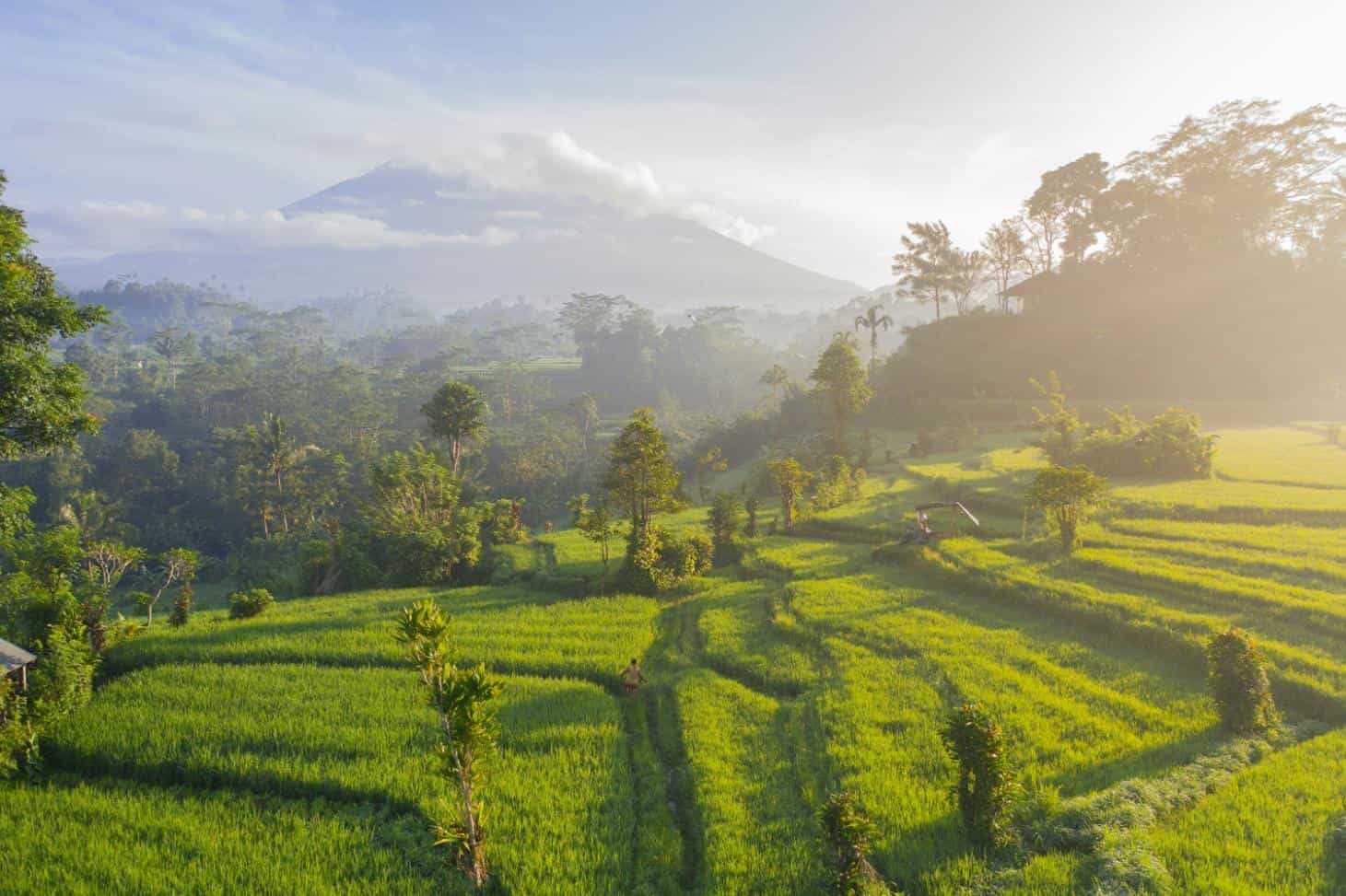
The wet season landscape is Bali at its most photographically extraordinary — the rice paddies are flooded with reflective water, the jungle is vivid green, and the waterfalls of the north coast (Gitgit, Sekumpul) run at their most dramatic. Bali April — the transition month — begins to show this green intensity while the rains taper.
Nyepi (Balinese New Year, March or April depending on the lunar calendar) is one of the world's most extraordinary cultural experiences — a day of complete silence when the entire island shuts down, including Ngurah Rai International Airport. The silence is enforced by village guards (pecalang). Being in Bali for Nyepi, if you plan around the travel disruption, is genuinely extraordinary.
Where to Stay in Bali
Ubud is the cultural heart — the Sacred Monkey Forest, Tegalalang Rice Terraces, the best restaurants on the island, and the finest traditional dance performances. At altitude (300m), temperatures are slightly cooler than the coast. The best base for temple visits and cultural immersion.
Canggu has replaced Seminyak as the island's most creative area — digital nomad cafés, good surf at Echo Beach, the best restaurant scene outside Ubud, and accommodation at lower prices than Seminyak with better atmosphere.
Sidemen Valley (east of Ubud) is the island's most beautiful traditional landscape — rice terraces backed by Mount Agung, weaving villages, and almost no tourist infrastructure. This is what Bali looked like 30 years ago.
Nusa Penida (boat from Sanur, 45 minutes) dominates Bali photography — Kelingking Beach (the T-Rex cliff), Angel's Billabong, and Crystal Bay. Go in shoulder season when the day-trip boats from the main island are fewer.
Eating in Bali
Bali Food Essentials
- Babi guling (spit-roast pig): Ibu Oka in Ubud — queue by 11am or it sells out. The island's most famous dish, only at specialist warungs.
- Nasi campur: Mixed rice with small portions of various dishes — the staple meal at any warung, extraordinarily good for Rp20,000–35,000 (£1–2).
- Warung culture: Family-run restaurants serving traditional Balinese food — in Ubud the backstreets around Jalan Dewi Sita have the best value warungs.
- Jimbaran seafood: Beach grills at sunset — touristy but genuinely excellent grilled fish and prawns at the fish market restaurants on the Jimbaran Bay beachfront.
Also Consider
Pairs well with, or alternatives worth comparing:
Comparing your options? Read our detailed Bali vs Thailand comparison — shoulder season timing, price differences, and an honest verdict on which to visit.
Wondering how much you actually save in shoulder season? Our Shoulder Season Price Report analyses hotel prices across 110 destinations — flights are 37% cheaper, hotels drop 20–50%, and September is the world's most valuable travel month.
Crowd levels by month
Crowd levels by month — Bali
Based on tourism arrival data, search trends & cruise schedules
Crowd ratings are relative to this destination's own peak — not a global scale. How we measure crowds →
Frequently Asked Questions About Bali
- When is the best time to visit Bali? Bali has two distinct seasons. The dry season (April–October) is the peak period — July–August is the busiest month with Australian and European visitors driving prices up 40–60%. April–May and September are the shoulder months within the dry season: good weather, fewer crowds, and hotel prices 30–40% below the high season peak.
- What is Bali's wet season like? The wet season (November–March) brings daily rain, typically short afternoon showers rather than all-day rain. The landscape is extraordinarily green, rice paddies and rice terraces are at their most photogenic, and tourist numbers are significantly lower. It's entirely visitable — the cheapest time — with the trade-off of occasional heavy rain.
- What is Nyepi? Nyepi is the Balinese New Year — a day of complete silence when the entire island shuts down, including the airport. No lights, no movement outdoors, no fires. It falls in March or April. Extraordinary to experience if you're already there; important to plan around as it affects all travel for 24 hours.
- Which part of Bali should I stay in? Ubud for culture, temples, and the best food. Canggu for the digital nomad/surf scene and best restaurants outside Ubud. Seminyak for upmarket beach clubs and nightlife. Sidemen Valley for the most beautiful traditional landscapes. Nusa Penida (day trip or overnight) for the island's most dramatic photography.
- Is Bali still worth visiting given overtourism concerns? Yes — but location selection matters enormously. Kuta and Seminyak are heavily developed. Ubud, Sidemen, Amed, and Nusa Penida feel entirely different — genuinely Balinese, extraordinarily beautiful, and with manageable visitor numbers outside the July–August peak. The island rewards those who go beyond the main tourist circuit.
Ready to Book?
April is one of the best times to visit Bali. Compare prices now:
We may earn a small commission on hotel bookings at no extra cost to you.
Bali Travel Guide
Where to Stay in Bali
Budget
€20–50/night
Ubud guesthouses or Canggu homestays
Family-run guesthouses with breakfast, pool, often beautiful gardens
Mid-range
€80–150/night
Seminyak or Ubud boutique villas
Private pool villas, staff, breakfast included — extraordinary value
Splurge
€250+/night
Nusa Dua or cliff-top Uluwatu
World-class resort hotels with elaborate spa facilities and ocean views
Which Neighbourhood to Base Yourself In
Ubud
Cultural, jungle, yoga-heavy
Rice terraces, cooking classes, temples, and the Monkey Forest
Canggu
Surf, digital nomad, hip
Beach clubs, brunch spots, surf lessons, co-working spaces
Seminyak
Upscale beach resort
Sunset beach bars, boutique shopping, high-end restaurants
Sidemen
Rural, quiet, authentic
Rice paddy walks, traditional village life, no crowds
What to Eat in Bali
Nasi goreng
Where: Any warung (local restaurant) — the simpler the better
Indonesia's national dish: fried rice with egg, kecap manis, and chilli
Satay
Where: Any roadside satay cart in the evening
Chicken or pork skewers with peanut sauce — they're everywhere and excellent
Babi guling
Where: Ibu Oka in Ubud (the famous one) or any local warung on feast days
Balinese spit-roast pork — crispy skin, fragrant spices, extraordinary
Fresh fruit juice
Where: Everywhere
Bali's tropical fruit — mango, papaya, snake fruit — made into fresh juice for under €1
Getting Around Bali
Hire a private driver for the day (€35–45) for any trip beyond your immediate area — this is the most practical and affordable option. Ride-sharing apps (Grab, Gojek) cover Canggu, Seminyak, and Kuta well. Scooter rental is popular but requires experience — Bali's roads are chaotic and accidents are common. Walking is only practical within individual neighbourhoods.
Day Trips from Bali
Nusa Penida
Full day
Fast boat from Sanur or Padang Bai, 30–45 minutes
Dramatic cliff scenery, Kelingking Beach (the dinosaur head viewpoint), crystal-clear snorkelling
Mount Batur sunrise trek
Early morning (3am start)
Driver from your accommodation to Kintamani, 1.5 hours
An active volcano sunrise — 2 hours up, watching dawn break over the caldera
Jatiluwih rice terraces
Half day
Driver, 1.5 hours from Ubud
UNESCO-listed terraced rice paddies — more authentic than Tegallalang with a fraction of the visitors
This destination is great for:
Bali vs Thailand: which should you visit?
Side-by-side comparison - timing, cost, and an honest verdict.
Bali is featured in: